Differentiation
Digitalization, electrification, and regulation are making premium vehicles feel more alike and making brand character harder to keep legible in the product.

Digitalization, electrification, and regulation are making premium vehicles feel more alike and making brand character harder to keep legible in the product.
Can Porsche’s higher-volume range continue to earn Porsche pricing and meaningful scale as digital experience, electrification, practical fundamentals, and local-market fit become more important?
Where it stands
Porsche’s practical models are losing ground even as key U.S. rivals grow. Greater powertrain flexibility and selective China localization may help, but the broader range must still prove it can sustain meaningful demand at Porsche prices.
Read the full Big Question →
Can Mercedes make technology feel like a new and lasting expression of Mercedes luxury—or will democratized technology and accelerating imitation make the brand more interchangeable?
Where it stands
Mercedes’ new BEVs are gaining traction in Europe, suggesting technology is again becoming a recognizable expression of Mercedes luxury. In China, CLA L shoppers criticized driver assistance, voice response, and interface design; the electric GLC L is the next test.
Read the full Big Question →
Can Tesla preserve the tolerance premium that lets it move faster and ask more of customers than a conventional automaker?
Where it stands
Tesla’s tolerance premium appears to survive, but it now depends more on present-tense product and value than mission belief; the open test is whether repeated customer friction exhausts it.
Read the full Big Question →
After the Model S invention wave and Model 3/Y scale wave, can Tesla keep the car product compelling in an execution phase it no longer monopolizes?
Where it stands
Model Y extensions are producing near-term strength, but they do not yet show Tesla can sustain a competitive broader lineup; the test is how seriously Tesla invests to defend its lead as competition intensifies.
Read the full Big Question →
Can Genesis turn distinctive design, product character, and Korean hospitality into a coherent luxury identity that compounds across product cycles and earns durable loyalty and pricing power beyond individual product wins?
Where it stands
Genesis has a credible design-led luxury proposition, and the GV90 shows it can carry concept ambition into a production flagship. But an aging, concentrated core lineup and missing hybrids leave broader coherence, loyalty, and pricing power dependent on the rest of the next cycle.
Read the full Big Question →
Can BMW continue to command a premium through exceptional balance while preserving driving pleasure as its organizing principle?
Where it stands
BMW’s differentiation remains intact: exceptional balance supports strong demand, while driving pleasure keeps the lineup recognizably BMW. But pricing power remains unproven. Neue Klasse must preserve that character as shared technology and regulation make premium vehicles feel increasingly alike.
Read the full Big Question →
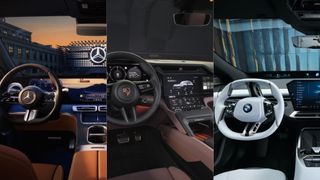
Clean-sheet designs let BMW, Mercedes, and Porsche show what more fully realized digital interiors look like
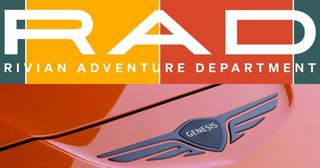
Different ways young brands are building an enthusiast edge
General Motors is integrating Apple Inc.’s CarPlay in its latest infotainment system, three years after upsetting some consumers by eliminating the popular interface from its electric vehicles.
The new system will allow drivers to use CarPlay or Google’s Android Auto on a split screen that also shows key vehicle gauges such as fuel, tire pressure, Super Cruise hands-free driving and towing information. In addition, the system enables the driver to use vehicle functions and phone apps with less toggling between screens.
There are many reasons to resist CarPlay: control over the experience, integration across the car’s components and subsystems, and control over the customer relationship.
But customers generally expect CarPlay, and only a small number of players have gotten away with not supporting it.
Tesla and Rivian are two of them. The common threads: both brands are significantly differentiated, to the point where a meaningful number of customers will accept the trade-offs, and both have strong, deeply integrated in-house tech stacks.