
Porsche Q2 2026 Earnings
Porsche’s first-half results suggest a smaller company can remain resilient, but leave open whether its broader model range can sustain Porsche economics
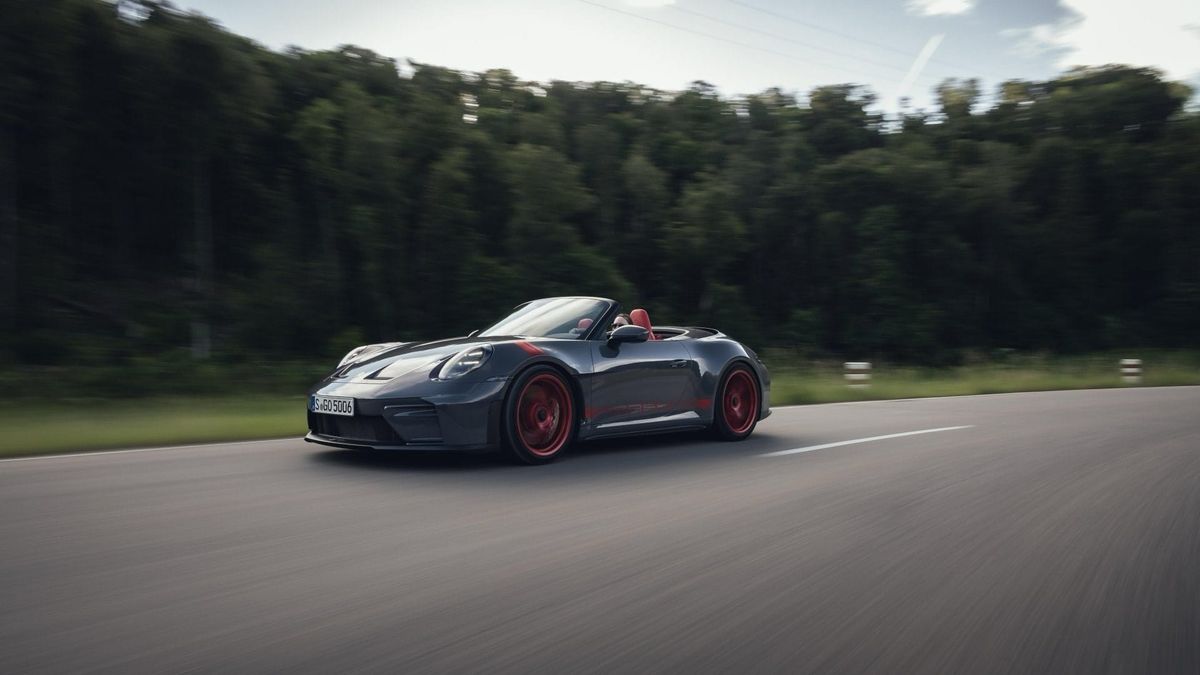
Ferry Porsche’s often-repeated line—“The last car that will ever be built will be a sports car”—rests on a simple idea: driving is an emotional act, not merely a practical one. The unstated implication is that as transportation evolves toward autonomy and other forms, there will always be people who love driving—and a market for cars built for them.
It feels fitting that Porsche’s response to the unwinding of its 2022 IPO-era strategy aligns with that ethos. Facing a significant drop in demand in China—China represented 31.7% of Porsche’s global deliveries in 2021 and has since fallen to 11.9%—it has chosen not to change its product in ways it feels would compromise its identity. Porsche has instead opted to reduce its retail footprint there and to focus on customers who appreciate the brand and products on their existing merits. It is also selectively localizing technology and configurations, and has declined to move production to China or implement discounts in an attempt to stoke demand.
Porsche’s 2022 investment case targeted more than 50% BEV deliveries by 2025 and over 80% by 2030. Its BEV share instead fell from 23.5% in H1 2025 to 19.4% in H1 2026. Porsche is extending ICE and plug-in-hybrid programs, delaying a future EV platform, and allowing customer demand to govern the powertrain mix.
Porsche’s first-half results provide an early test of the economic logic behind its Strategy 2035 reset, which reads as an effort to make the two IPO-era outcomes above—substantial China volume and rapid BEV adoption—less necessary by building a leaner, more flexible business that can remain resilient without them. Handelsblatt reports that Porsche is restructuring so it can make healthy profits even if annual volume falls to roughly 200,000 vehicles, though Porsche has not confirmed that scenario.
Revenue and cash held up much better than deliveries, suggesting Porsche can cushion reduced sales through price, mix, and lower investment. Deliveries fell 16.5%, to 122,306, but revenue declined only 5.1% to €17.23 billion. Automotive net cash flow rose from €394 million to €1.02 billion.
Group operating return on sales rose from 5.5% to 7.8%, still well below Porsche’s historical standard. But net realignment costs fell from roughly €800 million in H1 2025 to roughly €100 million this year—a €700 million swing that more than accounts for the €340 million increase in reported operating profit. The result demonstrates reported margin resilience, but not yet a recovery in Porsche’s underlying operating economics.
911 deliveries increased 19%, driven by sustained demand and the phased introduction of additional derivatives. Across the model range, Porsche says the mix included a significant share of GTS, Turbo, and GT models.
The rest of the lineup saw declines. Every reported region declined, including North America by 13% and Europe excluding Germany by 14%. In the U.S., where Porsche provides model-level results, Cayenne was relatively resilient: first-half sales fell 5.2%, but second-quarter sales were essentially flat. Macan fell 20.7%, although Porsche attributes part of the decline to strong Macan Electric deliveries a year earlier, slower-than-expected EV adoption, and expired U.S. incentives.
Panamera and Taycan are more concerning. Panamera’s 28.5% decline shows that its weakness extends beyond the temporary product gap in China. Taycan dropped 48.2% following a 22% global decline in 2025.
Cayenne, Macan, Panamera, and Taycan carry Porsche’s brand prestige, but are not differentiated the way the 911-led two-door range is. The sales declines of these models raise the question of whether demand for Porsche’s broader model line is smaller than the new strategy requires.
These products compete in high-volume segments against well-respected, less expensive models from BMW, Mercedes, VW’s own Audi, and others, and are built on shared VW Group platforms. By contrast, the closest U.S. rivals to Cayenne and Macan grew: X5 and X3 sales grew 23.7% and 29.8% in H1, while the GLE and GLC grew in both Q1 and Q2.
The pricing difference between a Porsche Cayenne (base/V6) and a comparable X5 has grown significantly over the last five years: the already-higher-priced Cayenne’s U.S. base MSRP rose 34% from MY2021 to MY2026, versus about 15% for the X5. In a Road & Reason snapshot of 86 configured MY2026 vehicles, the median Cayenne sticker was 40% above the X5’s—evidence of how aggressively Porsche prices the product, but also of how much more it must now justify. The Cayenne’s resale behavior also looks much more like the segment’s than the 911’s: iSeeCars estimates five-year depreciation of 45.2% for the Cayenne, versus 53.1% for the X5 and 7.8% for the 911 (coupe).
Ferry Porsche’s line also helps explain the 911’s resilience: it is the part of the range least dependent on practical need or comparison shopping. But modern Porsche was built in part by extending the 911’s emotional authority into cars people also buy for practical reasons. If those models cannot sustain enough demand and profit at Porsche prices, the company’s weakness may shift from dependence on China and rapid BEV adoption to overreliance on 911 sales and profit.
Strategy 2035 appears designed to make additional volume an upside rather than an economic prerequisite while restoring Porsche-grade margins across a deliberately smaller company. The first half offers early evidence that Porsche can protect revenue and cash as deliveries fall. It does not yet show that Porsche can restore those margins—or that its broader range remains differentiated enough to command Porsche prices at the scale a multi-model company requires.
Porsche says it will provide “comprehensive insight” into Strategy 2035 at its Capital Markets Day on October 7. That should clarify the financial targets, cost and investment structure, portfolio priorities, and perhaps the annual volume assumed in the plan.
The earnings read against Porsche’s Big Questions:
- Desirable Scale receives early positive evidence but remains unresolved economically. Deliveries fell 16.5%, but revenue declined only 5.1% and automotive net cash flow more than doubled, suggesting Porsche can absorb lower volume. The 7.8% operating margin does not yet demonstrate underlying recovery, and October 7 must show how the smaller cost base and deeper Group sharing can restore Porsche-grade economics without overreliance on the 911.
- Earning the Porsche Premium moves negative. Product-cycle and EV factors complicate the pattern but do not fully explain it: Cayenne and Macan lost U.S. sales while their closest BMW and Mercedes rivals grew. That divergence does not prove a structural demand problem across Porsche’s broader range, but it makes one harder to dismiss.