
Porsche Is Learning to Live with Less China
Happy Friday. Porsche’s first-half results are starting to show what a smaller Porsche could look like. Its strategy selectively accommodates Chinese preferences while focusing on customers who value Porsche on its own terms. China remains the reason for Porsche’s reset, but not the main test of whether the reset works.
The first-half results offer encouraging evidence that a smaller Porsche can absorb lower volume: deliveries fell 16.5%, but revenue declined only 5.1% and automotive net cash flow more than doubled. They do not yet show that Porsche can recover its historical margins. Cayenne and Macan lost U.S. sales while BMW’s X5 and X3 and Mercedes’ GLE and GLC gained, raising a more fundamental question: can Porsche’s practical models command Porsche prices at the scale a multi-model company requires?
Mercedes faces a different China problem. Porsche is restructuring to remain profitable with less Chinese volume; Mercedes is still relying on localized products and technology to rebuild demand. Following the Mercedes Q2 2026 earnings read, on-the-ground evidence in China shows that the CLA L has significant product gaps while costing more than models like the Xiaomi SU7, moving the assessments on both the China and Localized Luxury and Technology as New Mercedes-ness Big Questions in negative directions. The Core Luxury GLC L should provide a more discriminating test. Its first variant went on sale in July, with additional trims scheduled for fall.
The Bloomberg reporting behind that evidence also included a statement from Mercedes that the electric CLA was never intended to drive volume, but rather to showcase its latest technology in the Entry segment. Entry is Mercedes’ gateway for new customers and a meaningful volume tier; the shopper-reported product gaps and reports that Mercedes is limiting its push until the economics improve both cut against the idea that demand is unimportant. The earnings assessment—that the CLA L has failed the first China test of Mercedes’ next-generation BEVs—still stands. An update section was added to the Mercedes-Benz Q2 2026 Earnings article that incorporates Mercedes’ statement and relevant 2022 strategy context about the role of the Entry segment.
Elsewhere, BMW again described i3 demand as “strong” without disclosing an order count, and said Plant Munich’s manufacturing costs have fallen a further 10%—a positive step toward the combustion-like margins the Neue Klasse Bet requires.
In parallel with its earnings, the Porsche brand page is now live, alongside brand pages for BMW, Mercedes-Benz, and Tesla. Each brand page presents a living read on the company, structured around the major strategic uncertainties it faces—its “Big Questions.” Evidence posts track and assess developments that bear on those questions, Articles draw broader conclusions, and Earnings evaluations use the company’s reported results and guidance to reassess where the brand stands.
Brand pages for Genesis, Rivian, Ferrari, and Lexus will follow in the coming weeks.
In This Week’s Read
Porsche · Earnings
- Porsche Q2 2026 Earnings
Mercedes-Benz · Technology as New Mercedes-ness
- The Mercedes CLA L Is Not Impressing Chinese Shoppers
Mercedes-Benz · China and Localized Luxury
- The Mercedes CLA L Is Not Impressing Chinese Shoppers
BMW · Neue Klasse Bet
- BMW Links the i3 Ramp to 10% Lower Munich Manufacturing Costs
The Read
Porsche · Earnings
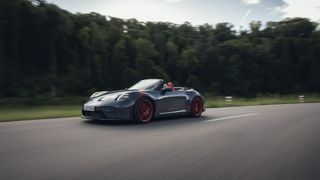
Porsche Q2 2026 EarningsPorsche’s first-half results suggest a smaller company can remain resilient, but leave open whether its broader model range can sustain Porsche economics |
 |
Mercedes-Benz · Technology as New Mercedes-ness
The Mercedes CLA L Is Not Impressing Chinese Shoppers
Full text under Mercedes-Benz · China and Localized Luxury
Mercedes-Benz · China and Localized Luxury
The Mercedes CLA L Is Not Impressing Chinese Shoppers
Also bears on: Mercedes-Benz · Technology as New Mercedes-ness
Bloomberg reporting published by Automotive News provides on-the-ground evidence of why Mercedes-Benz and other German automakers are struggling in China.
The article focuses most closely on how the Chinese market has received the Mercedes CLA L (the only electric CLA sold in China), a model Mercedes-Benz Q2 2026 Earnings assessed as having failed the first China test of the brand’s next-generation BEVs.
The shopper accounts point past price: buyers found important parts of the product less compelling than the alternatives, while it also appears to offer too little traditional Mercedes luxury and practicality to compensate.
Flora Li and her husband compared the CLA L with the Xiaomi SU7 and SAIC–Huawei Z7. She found the CLA’s automated-driving software unconvincing, felt the car responded slowly to voice commands, and said the handling wasn’t as good as some of the domestic options.
Summer Chen, whose family had owned a Mercedes E300 for around 10 years—and who was willing to pay slightly more to stay with the brand—was underwhelmed:
“Smart features aren’t an advantage for Mercedes,” Chen said. “Whatever the company comes up with, Tesla, Xiaomi and Huawei can too.”
Notably, the Tesla Model 3 starts at 235,500 yuan, above the 229,000 yuan starting price of the Mercedes.
Li Yanwei, an adviser to the China Automobile Dealers Association, said the CLA’s sporty positioning targets younger buyers while offering too little space for Mercedes’ traditional family-oriented customers. In his formulation, it is “not the most affordable and not the most luxurious.”
Bloomberg reports that Mercedes sold 1,153 CLAs in the first half, while Xiaomi delivered more than 80,000 examples of its 215,900-yuan SU7. The electric CLA is already priced about 40% below its European counterpart, and Bloomberg sources who asked not to be identified said competing on price would require further cuts that would leave Mercedes losing money on nearly every car.
Mercedes said the electric GLC L (the only electric GLC sold in China) has received positive market feedback and is drawing pre-orders for two additional trims. The CLA’s reception raises the stakes of the GLC L’s launch, the more decisive test of Mercedes’ China strategy. Its position in Mercedes’ Core Luxury tier, SUV body, and China-specific five- and six-seat layouts should align more closely with both the market and what customers expect from a Mercedes. If it cannot rebuild demand at sustainable pricing, the brand will face a deeper question about whether its proposition remains competitive while commanding a premium in China.
BMW · Neue Klasse Bet
BMW Links the i3 Ramp to 10% Lower Munich Manufacturing Costs
BMW has begun series production of the i3 at Plant Munich with two early positive signals: demand BMW again describes as strong, and what it says is a further 10% reduction in the plant’s manufacturing costs.
BMW opened i3 Launch Edition orders earlier than initially planned, in mid-June, and similarly said the i3 has received “great interest” in its half-year results. It has not disclosed an i3 order count, but says the iX3 is approaching 100,000. This is a favorable indicator, but not yet measurable evidence of customer pull.
The 10% cost disclosure supports BMW’s case that Neue Klasse can become a broader technology and cost system. BMW attributes the reduction to the transformed plant, optimized processes, automation and digitalization, and the Neue Klasse vehicle architecture.
Since this is a production announcement, it doesn’t provide the baseline, timeframe, or investment and depreciation detail needed to translate the 10% plant figure into vehicle-level economics. The number is evidence of improving factory performance, not the i3’s total vehicle cost, contribution margin, or economics against a comparable combustion 3 Series.
This disclosure is a positive step toward proof of combustion-like margins. Pricing and incentives, battery economics, utilization, quality, warranty costs, and depreciation still determine whether the i3 can deliver them.