Genesis · Earnings
Genesis Q2 2026 Earnings: Proof of Demand, a System Still in Progress
Genesis has reached meaningful scale—now its products, retail network, and ownership experience have to reinforce one another

Genesis has reached meaningful scale—now its products, retail network, and ownership experience have to reinforce one another
Genesis has established a credible luxury proposition, but not yet a self-reinforcing brand system. Its design language, interiors, product quality, and Korean hospitality have created meaningful demand and an identity recognizably separate from Hyundai and competitors. Yet the brand’s resilience remains heavily product-dependent: Korea weakened as the
Genesis has reached meaningful U.S. scale and broad authorized coverage, but the commercial system is not yet self-sustaining across markets. In its 10th U.S. selling year, Genesis sold 82,331 vehicles—9.1% of Hyundai-brand volume—through more than 200 authorized retailers. Only 84 were dedicated
Genesis has proved it can create desirable products and meaningful demand, especially in Korea and the United States. But its first decade has produced a beachhead, not yet a self-reinforcing brand system. Record U.S. sales have coincided with declining global shipments and a sharp drop in Korea. An
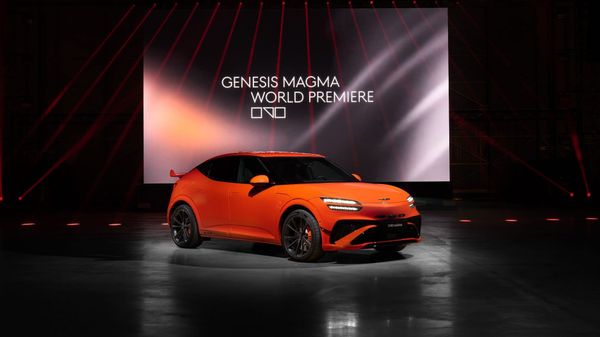
Early GV60 Magma reviews and first-season racing results suggest Genesis is developing a credible, distinct performance character. That is a strong start, though not yet a halo: customer demand, realized pricing, further Magma models, and transfer into the core range remain unproven.
Genesis has meaningful reach and scale, but fewer than half its U.S. outlets are dedicated and network-wide throughput is less than half Lexus’s year-10 precedent. The next product cycle must raise volume enough to make retail conversion and broader expansion economically durable.
Genesis has a credible design-led luxury proposition, and the GV90 shows it can carry concept ambition into a production flagship. But an aging, concentrated core lineup and missing hybrids leave broader coherence, loyalty, and pricing power dependent on the rest of the next cycle.
Magma has crossed from concept to early execution, but not yet from execution to halo. Initial GV60 Magma drives describe a credible blend of extreme performance, everyday usability, cabin luxury, and refinement rather than a track-first imitation of M or AMG. Genesis Magma Racing scored WEC points in its
Early evidence suggests Porsche can absorb lower volume, while Mercedes’ CLA L exposes China product gaps and BMW reports progress on Neue Klasse manufacturing costs
Mercedes’ technology strategy is producing more credible products, but not yet a proven cross-market advantage. Reviews of the C400 EV and electric GLC show the post-EQ direction reintegrating electrification and software with recognizable Mercedes virtues—comfort, refinement, materials, usable controls, and conventional luxury cues. Q2 BEV growth and
Mercedes lost position in China faster than the market declined during the first half, and the CLA L failed the first market test of its next-generation localized product strategy. First-half sales fell 28.3%—roughly eight points worse than the market benchmark cited by BMW—and Q2 declined