
Ferrari Grows Earnings and Revenue; Growing Shipments Is Risky Business
Happy Friday. Enzo Ferrari famously said, “Ferrari will always deliver one less car than the market demands.” It has tightly managed its volume, staying in the 13,000–14,000 annual shipment range since 2022. Shipments were down in Q2 but both revenue and earnings grew, and Ferrari hit its 2026 revenue and operating profit targets in 2025, a year early.
Ferrari’s model is working, but models like the Luce, the brand’s first EV that’s designed to expand its client base and the ways Ferraris are used, risk diluting the prestige and desirability that underlie its brand and business model. Prominent voices in the Ferrari world have questioned whether Luce should wear the Ferrari badge, though the brand’s CEO says Luce captured the interest of both new and existing clients and orders met expectations.
BMW announced a change to its image data collection—used to improve driver assistance—that’s an example of its approach to improving its new-generation products after they’re in customers’ hands. It’s also noteworthy the change will be applied to mid-cycle updates of existing models, like the 7 Series, not just the clean-sheet Neue Klasse models and redesigns.
A Ferrari brand page will follow this week’s earnings post shortly.
I will be traveling the next couple weeks, so the next Weekly Read will be September 25.
In This Week’s Read
Ferrari · Earnings
- Ferrari Q2 2026 Earnings
BMW · Neue Klasse Bet
- BMW’s Approach to Improving Its New-Gen Products Post-Sale
The Read
Ferrari · Earnings
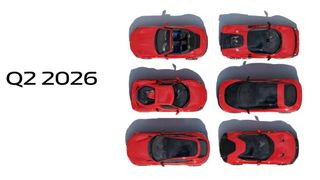
Ferrari Q2 2026 EarningsQ2 shows how portfolio renewal and personalizations sustain growth, while Luce exposes the tension between expanding the offer and preserving Ferrari’s brand |
 |
BMW · Neue Klasse Bet
BMW’s Approach to Improving Its New-Gen Products Post-Sale
BMW announced a largely functional change to a data collection program it began in April:
[…]
Thanks to BMW software updates, customers and road users will benefit from over-the-air system improvements that can be implemented in the future using the image data collected from real-world traffic situations.
The change involves blurring faces and license plates: the earlier process blurred images inside the car before sending them to the cloud, while the new process uploads unblurred images to a protected back-end environment. The change seems sensible—in-vehicle blurring obscures cues like pedestrian gaze and head movement that are important for training.
It’s a small but visible sign of BMW’s approach to improving Neue Klasse products post-sale and spreading the technology across the broader lineup—BMW says the change applies to the Neue Klasse iX3 and i3, as well as new-generation models like the X5 and updated models like the 7 Series, and other upcoming models.