
Genesis Q2 2026 Earnings: Proof of Demand, a System Still in Progress
Genesis has reached meaningful scale—now its products, retail network, and ownership experience have to reinforce one another
Over its first decade selling in the United States, Genesis built meaningful demand and became a material business in both the U.S. market and its Korean home market.
Genesis’s Q2 results show the limit of that progress at the start of its second decade: record first-half U.S. sales were outweighed by a decline in Korea, pulling global shipments lower and highlighting the brand’s reliance on an aging lineup and those two pillar markets.
Hyundai wants Genesis to reach 350,000 annual sales by 2030—up from roughly 221,000 global retail sales in 2025. Genesis must build the product cadence, dedicated retail system, and global reach this ambition requires. These elements need to reinforce one another: refreshed products need enough distribution and scale to justify repeated investment; dedicated retailers need more product and throughput to justify theirs; and broader global reach must produce enough local demand to sustain both.
A Split Second Quarter
Genesis’s Q2 2026 earnings are bundled with parent Hyundai Motor Company’s.
Hyundai gave a hint at the margins at its 2025 CEO Investor Day:
The brand has reached one million cumulative sales in less than eight years and maintains double-digit profit margins across more than 20 global markets, solidifying its position as a top-tier premium automotive brand.
This suggests Genesis can produce healthy margins in individual markets, but Hyundai doesn’t provide a window into the brand’s consolidated profitability or returns on its product, platform, and retail investments.
Genesis global shipments to dealers and distributors fell roughly 17% in Q2 and 11% over the first half. Genesis recorded a record 39,088 U.S. first-half sales, and its North American COO reported they were up roughly 5%. Korea still produced more volume—47,024 vehicles—but fell roughly 23%, overwhelming the American gain. A March supplier fire interrupted production, compounding pressure from an aging lineup, the lack of hybrids as Korean demand shifts toward electrified vehicles, and rising import competition. The available disclosures do not show how much of the decline each factor caused.
Hyundai does not provide a detailed regional sales breakdown for Genesis, but available data suggests other markets are not yet large enough to offset weaknesses in either of its two primary markets. In 2025, Genesis sold 118,395 vehicles in Korea and 82,331 in the U.S.—together more than 90% of the brand’s 221,482 global retail sales. Europe contributed 2,476 registrations in 2025, while Chinese trade press reported 1,328 Genesis sales in China in 2024. The China figure is dated, but it shows the market plays a minor role.
At Genesis’s first-decade milestone, Acura and Lexus offer useful benchmarks for assessing the commercial weight Genesis has built, and how it can build on that foundation in its second decade.
Proof of Demand
The U.S. was central to Acura’s 1986 and Lexus’s 1989 launches and is Genesis’s largest market outside Korea, which makes it a useful basis for comparing the brands’ first decades. It is also a favorable lens for Genesis: the brand’s SUV mix and inherited Hyundai reach put it in a position of strength.
Acura sold 97,451 cars in 1995, its 10th selling year, which was 14% of Honda-brand volume at the time. Lexus made 156,260 sales in 1998, its 10th year, comprising 13% of Toyota-brand volume. Genesis’s 82,331 sales in 2025 represented 9.1% of Hyundai-brand volume (the total number excluded Genesis).
This ratio is a proxy for how much commercial and strategic weight each luxury marque has acquired inside its parent’s U.S. business. The relationship is reciprocal: parent and retailer investment helps create scale, while the scale and demand the brand achieves then strengthen—or weaken—the case for further investment.
Genesis trails both the other brands’ ratio precedents, but not dramatically. It has reached meaningful scale, but Acura’s later trajectory shows why early scale doesn’t guarantee sustained success. Acura’s Weak Foundation covers the longer-term warning Genesis should keep in mind: the Honda luxury brand’s early commercial success and strong individual products did not compound into a durable global brand system.
Lexus, by contrast, combined differentiated products, retail execution, customer loyalty, and sustained organizational commitment into a stronger system that gave later products more resilience. The Lexus IS sedan shows that resilience in practice: despite having no full redesign since 2014, it sold 19,714 U.S. vehicles in 2025—more than twice the volume of the more recently redesigned Acura TLX.
Today Acura’s parent-sales ratio has dropped to around 10%—a four-point drop from its 10-year number—while Lexus has risen to over 17%. This divergence shows Lexus’s stronger brand system at work. For Genesis’s wins to compound, the brand needs its product, retail, and ownership investments to reinforce one another in the same way.
The Next Product Cycle Has to Deliver
Genesis said GV70 and GV80 momentum contributed to its second-quarter U.S. growth. Although both have received mid-cycle updates, they remain first-generation products in their fifth and sixth model years. The rest of the lineup launched in model year 2023 or earlier, with the G80 and G70 sedan generations dating back to 2021 and 2019.
Genesis needs a renewed lineup that strengthens loyalty, pricing power, and the brand’s meaning in Korea and the U.S.—and gives it a compelling proposition elsewhere.
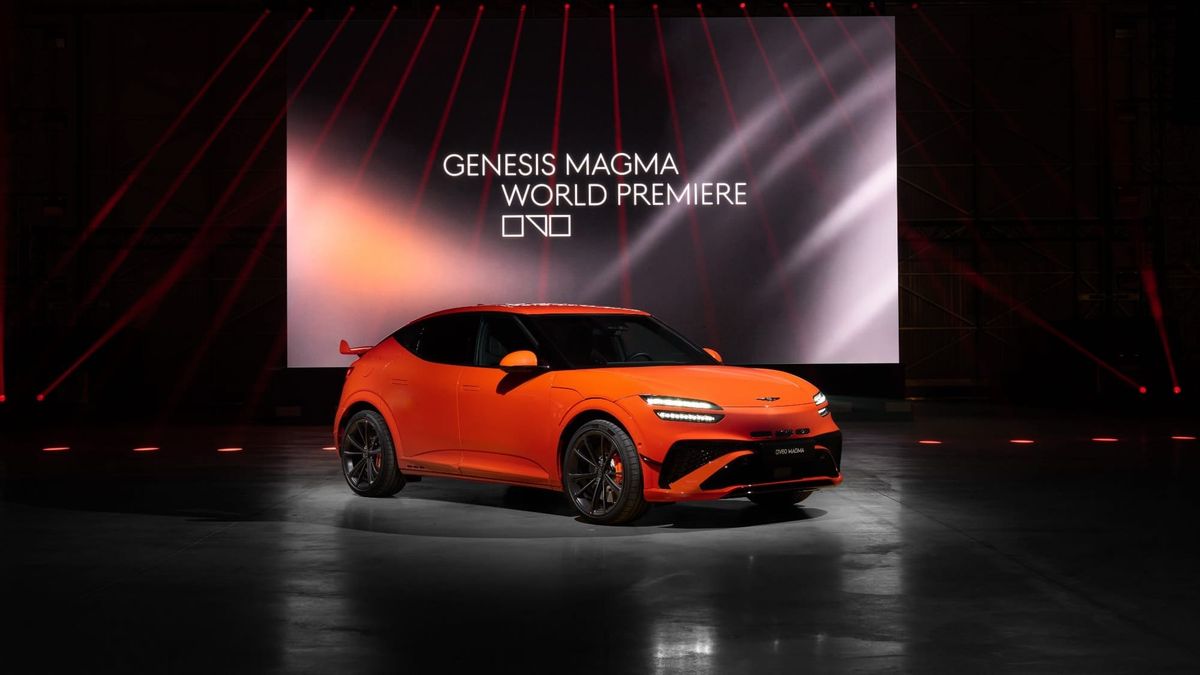
Evidence about Genesis’s next wave of products is encouraging. The brand recently announced its next-generation hybrid system will debut in a new GV80 Hybrid model in September. Genesis has now unveiled the GV90, a full-size electric flagship offered in standard and ultra-luxury Neolun forms, the latter carrying the concept’s coach doors and VIP-focused cabin into production. Rivian and Genesis Push the Extremes outlined Genesis’s Magma program, which is preparing to launch the GV60 Magma as its first model and has assembled a racing program that began competing in 2026.
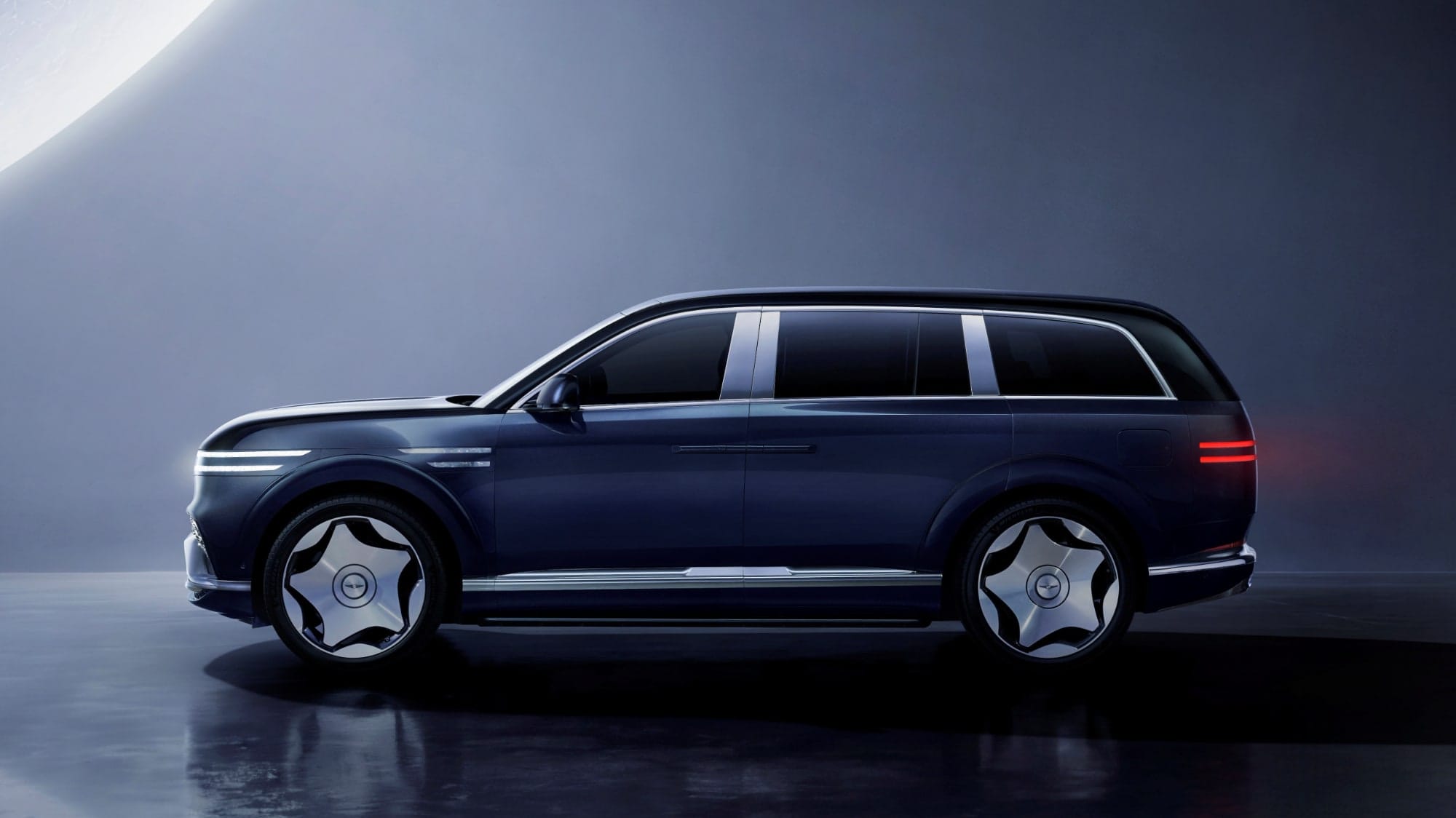
Genesis has also shared a lot of concept vehicles: the Magma GT, X Concept, X Speedium, three G90 variations, Mint, plus several others, including some shared in an August 2025 retrospective. These concepts show creative ambition and product optionality, but they also set expectations the current lineup has only partly met. That several of Neolun’s defining features translated into a production vehicle is an encouraging sign; the full product cycle will show how far Genesis can carry the ambition shown by its concepts across the production range.
Early drives of the GV60 Magma describe a credible combination of extreme performance, everyday usability, cabin luxury, and unusually strong refinement—evidence that Genesis is defining “Luxury High Performance” differently from a track-first imitation of M or AMG.
Genesis Magma Racing scored its first WEC points in its second race and finished its first 24 Hours of Le Mans, credible signs of investment and rapid organizational execution. Customer demand and pricing power will show whether this budding racing heritage has value beyond the track.
Genesis has proved its current portfolio can generate meaningful U.S. demand. The next cycle must build on that progress and make it more durable by restoring the home market, expanding demand, giving customers clearer reasons to choose the brand, and ensuring retailers have enough throughput to support a dedicated luxury network.
Converting Reach Into Dedicated Retail
Genesis borrowed reach from existing Hyundai dealers at launch because its initial sedan-only lineup did not produce enough volume to support dedicated facilities.
The GV70 and GV80 SUVs that launched for the 2022 and 2021 model years made standalone investment more viable. Genesis’s first dedicated store opened in 2022; Genesis-only facilities then grew from one to 35 by May 2024 and to 84 by February 2026. Its current full network of dedicated facilities and Hyundai-based outlets comprises over 200.
Acura and Lexus launched their brands and dedicated retail channels together. Acura had about 150 U.S. dealers by the end of its first year while Lexus had around 100. By its 10th year, Acura had close to 300, and Lexus had 174.
At the same stage, the three brands generated very different levels of U.S. throughput. Acura averaged roughly 325 vehicles per dealer in its 10th year—97,451 sales across nearly 300 dealers—while Lexus averaged roughly 898, with 156,260 sales across 174.
Using the more-than-200-retailer network Genesis disclosed in February 2026, its 82,331 U.S. sales in 2025 equate to fewer than 412 per outlet. These are simple averages, and Genesis does not disclose the split between dedicated and Hyundai-based outlets. Even so, the comparison places Genesis ahead of Acura’s year-10 precedent but at less than half of Lexus’s.
Modern benchmarks show there’s plenty of room for Genesis to grow: Lexus averaged roughly 1,517 vehicles per dealer across its 244 U.S. outlets in 2025, based on 370,260 sales, while BMW averaged roughly 1,111 per center across 350, based on 388,897 sales.
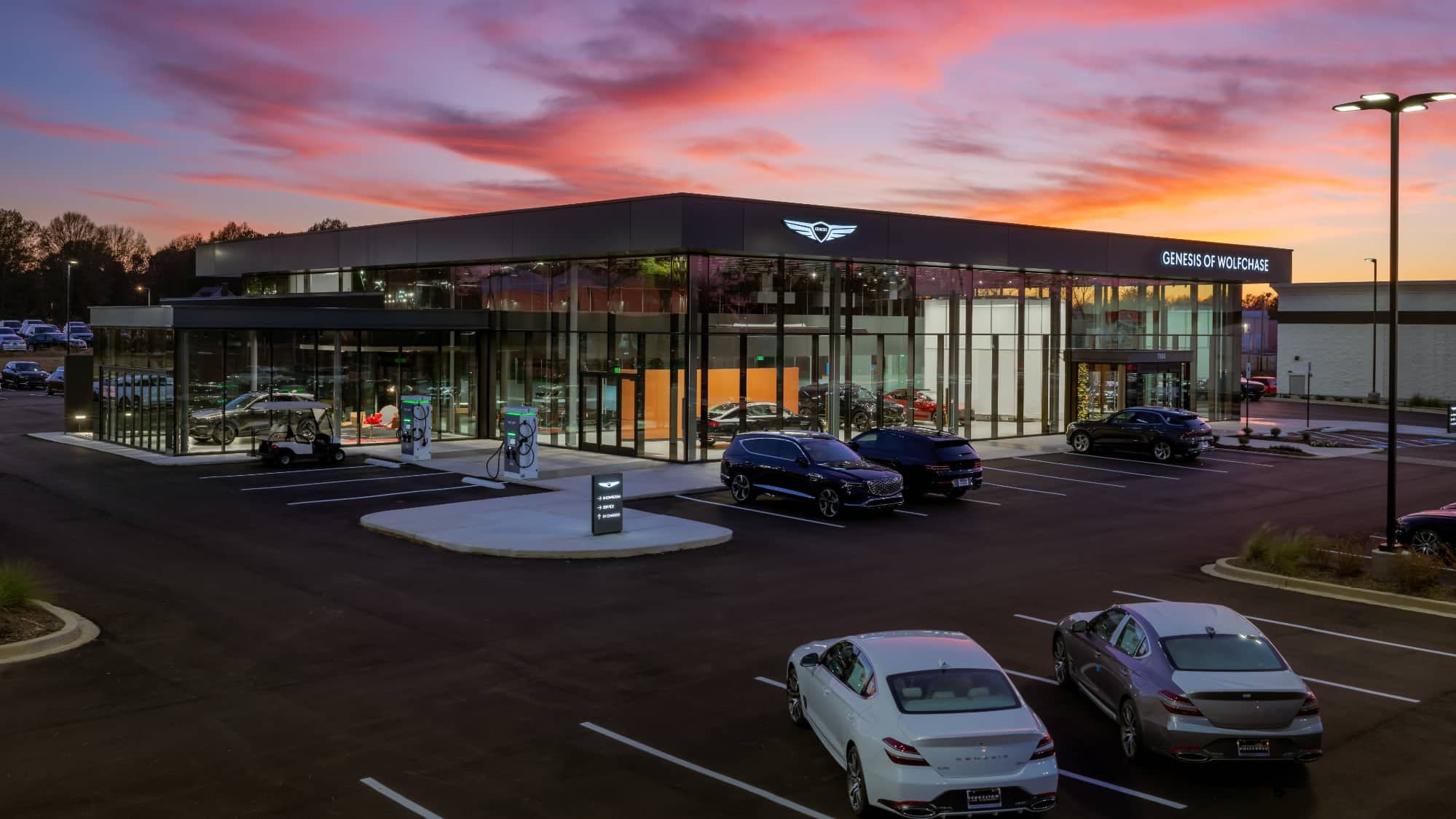
Dedicated stores give Genesis more control over that experience and make the brand feel independent. They become increasingly important as Genesis moves upmarket. A customer considering a G90, a future GV90, or a Magma model is buying more than just the car: the sales process, delivery, service access, loaner availability, and staff expertise are all part of the luxury proposition. A Hyundai facility can provide local access, but it may not reinforce the exclusivity and ownership experience needed to support Genesis’s higher prices.
Genesis’s next product cycle needs to raise volume enough to make broader dedicated-retailer conversion in the U.S. and retail expansion elsewhere economically viable.
Making the Wins Compound
In the near term, refreshed core models, hybrids, and broader BEV coverage need to restore demand in Genesis’s largest segments and give prospects, customers, and retailers a steadier stream of reasons to reengage.
Beyond that refresh cycle, Hyundai says Genesis’s next-generation platform will support multiple energy types and integrate its CODA software-defined-vehicle architecture. Genesis told Autocar it will be distinct from the Hyundai Group platforms the brand uses today. This gives Genesis an opportunity to make its cars unique in their underlying dynamics, packaging, and software.
Building meaningful scale in Europe, China, the Middle East, and other growth markets will require products compelling enough to win against entrenched global luxury brands and Chinese premium competitors expanding abroad. Converting its retail presence to dedicated Genesis stores must produce a consistent, on-brand luxury experience. The resulting sales, service, and parts revenue must then give local retail networks enough reason to keep investing.
Magma will test whether Genesis can translate design, engineering, and motorsport investment into a distinct product character that cascades across the lineup. Executed well, it will strengthen meaning and pricing power.
The upcoming models, Magma, the new platform, the hybrid rollout, and retail-network conversion and expansion should be judged by whether they reinforce a coherent Genesis proposition. Each has to make the others more viable: new products raise throughput, throughput supports dedicated retail and production economics, and a stronger ownership experience turns that investment into loyalty and repeat demand.
The Acura and Lexus results show the importance of that loop: comparable first-decade demand led to very different long-term outcomes. For Genesis, the 350,000-unit target ultimately tests whether it can turn its first-decade wins into a durable global brand system.
The Big Questions for Genesis
- Luxury Claim: Genesis has a credible, design-led luxury proposition, but an aging, concentrated lineup and the lack of hybrids leave its resilience dependent on product freshness. The next cycle must renew demand and show that Genesis’s appeal can extend beyond individual product wins.
- Distribution and Scale: Genesis has meaningful reach and scale, but retail conversion remains incomplete and network-wide throughput is less than half Lexus’s year-10 precedent. The next product cycle must raise volume enough to make conversion to dedicated Genesis dealerships economically durable.
- Magma—Halo and Heritage: The first product reviews and racing results suggest a credible Genesis performance character is beginning to emerge. That is a strong starting point; the next evidence will come from customer demand, realized pricing, the accumulation of racing heritage, and whether Magma strengthens the character and prestige of the core lineup.