Genesis

Luxury Claim

Can Genesis turn distinctive design, product character, and Korean hospitality into a coherent luxury identity that compounds across product cycles and earns durable loyalty and pricing power beyond individual product wins?

Assessment

Genesis has established a credible luxury proposition, but not yet a self-reinforcing brand system. Its design language, interiors, product quality, and Korean hospitality have created meaningful demand and an identity recognizably separate from Hyundai and competitors. Yet the brand’s resilience remains heavily product-dependent: Korea weakened as the lineup aged and customers moved toward powertrains Genesis largely lacked, while U.S. growth remains concentrated in the GV70 and GV80. Genesis has earned product legitimacy; it has not yet proved that its identity can sustain loyalty and pricing power through a slower product cycle.

The next portfolio cycle is the principal live test. The GV90 is an early positive signal: the Neolun variant carries defining concept features into production, while the lineup uses an eMP platform Genesis says is exclusive to the flagship. Other programs—hybrids, broader electrified coverage, halo and ultra-bespoke products, and a future multi-energy architecture integrated with Hyundai’s CODA software system—must show that this character can become coherent and repeatable across body styles and powertrains. The architecture’s value is whether it supports timely renewal while giving Genesis products distinctive dynamics, packaging, and software.

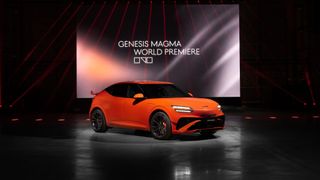
Dedicated retail must make that identity tangible through sales, service, and ownership. Magma can add an emotional and performance dimension, but it should also deepen character already perceivable in the core range.

The Luxury Claim strengthens if the next launches arrive on time, restore Korean demand, broaden U.S. growth beyond two SUVs, lift the desirability of the range together, and earn repeat demand and pricing power.

Articles

Evidence

The GV90 Shows the Blueprint for Genesis’s Next Product Cycle

New automotive brands have to create a product lineup and broader identity from scratch, and many of their choices reflect the time they launched.

Lexus entered a market skeptical that Toyota could create a world-class luxury car. The original Lexus LS400, launched as a 1990 model, in many ways took the form of the Mercedes models it was designed to compete against, particularly the S-Class it used as a benchmark.

Genesis, launched in late 2015, entered a mature luxury and premium market. To distinguish itself, Genesis models have repeatedly taken cues from ultra-luxury brands above their target competitors while competing aggressively on price.

Reviewers said the GV80 drew comparisons to a Bentley. Throttle House actually compared them:

The conclusion:

No, for half the price [of a used model] you do not get the full Bentayga experience. What you do get with the GV80 is an incredibly competent vehicle that easily goes toe-to-toe with its price-matched German rivals but with all the flair of a Bentayga.

The pattern continues with Genesis’s new electric GV90, which, in its top-of-the-line Neolun trim, has coach doors like the Rolls-Royce Cullinan and offers layers of luxury that go beyond those of its typical competitors.

Genesis GV90
Genesis GV90 | Genesis Newsroom

Car and Driver:

The Neolun is completely over the top, with standard 24-inch wheels, a veneer wood floor, unique upholstery choices, and front seats that can swivel 180 degrees to create a lounge setup when parked. The power-operated rear doors can open independently from the fronts thanks to a dual-motion hinge that slides the doors back before swinging them out.
Genesis GV90 Neolun
Genesis GV90 Neolun | Genesis Newsroom

C/D’s GV90 model page:

Expert Tip: The only other SUV on the market with coach doors is the Rolls-Royce Cullinan, and the GV90's sticker is but a fraction of the Roller's nearly half-million-dollar asking price.

That Car and Driver put the GV90 and Cullinan together demonstrates the uplift effect of Genesis’s approach. The brand’s bet is that the GV90 will stand out to buyers considering a BMW, Mercedes, or Audi in the same price range.

And maybe buyers in China. Though Genesis didn’t mention China in its GV90 news release and its current China sales are marginal, the brand’s target of 350,000 annual sales by 2030 includes expanding its market presence in China and other regions. The GV90’s strong focus on rear-seat luxury seems tailored to Chinese-market preferences: a four-seat Executive Suite, refrigerator, tables, privacy blinds, and six-zone variable-transparency roof, underpinned by a long 3,245mm (127.8-inch) wheelbase. Genesis previously fielded an Electrified G80 sedan in China with an extended wheelbase and features like VIP seats and a 27-inch display, suggesting Genesis sees rear-seat features as important to the market.

Genesis GV90 Interior
Genesis GV90 Interior | Genesis Newsroom

It’s critical for a brand to establish a unique and resonant identity. That’s often hard to discern in the early years, when a brand is defined by its initial products. Genesis has benefited from associations with Bentley and Rolls-Royce, but lasting customer loyalty depends on something more durable: a distinct brand identity that transcends comparisons and individual product cycles, then compounds into heritage.

The Throttle House reviewers saw signs of a Genesis identity in the 2021 video: “Knock-off jokes aside, the new G80 sedan and incoming GV70 do represent a huge step toward Genesis having its own character, one that we think it quite rightly deserves.” The “quad lamps”—an implementation of the brand’s “two lines” design motif—and the grille on the GV80 distinguish it when placed next to the Bentley it’s so often associated with. Genesis references Korean design elements in the GV90 news release—“ondol” underfloor heating and exterior flourishes inspired by the moon jar (a symbol of traditional Korean aesthetics).

And while the Neolun’s coach doors force an obvious comparison to the Rolls, the implementation of the “Neolun Arch Gate” is novel:

Genesis utilized a newly developed dual-motion hinge mechanism for the rear doors, optimized for the vehicle’s hidden B-pillar body structure which enables the rear doors to open and close independently without impeding the front doors.

Being both all-new and a flagship, the GV90 foreshadows Genesis’s upcoming product cycle. While the model continues the pattern of evoking Bentleys and Rolls-Royces, it delivers its ultra-luxury cues through Genesis’s own innovation, with a unique flair rooted in the brand’s home-country heritage. What to watch next is how far and how coherently Genesis carries its distinct innovation and flair across the upcoming lineup.