
Acura’s Weak Foundation
It’s more a regional channel than a global brand
Doug DeMuro said in a recent video that decisions by Honda and Nissan to “rob their luxury brands of the resources necessary for huge growth” are among the biggest auto industry mistakes of the last 30 years.
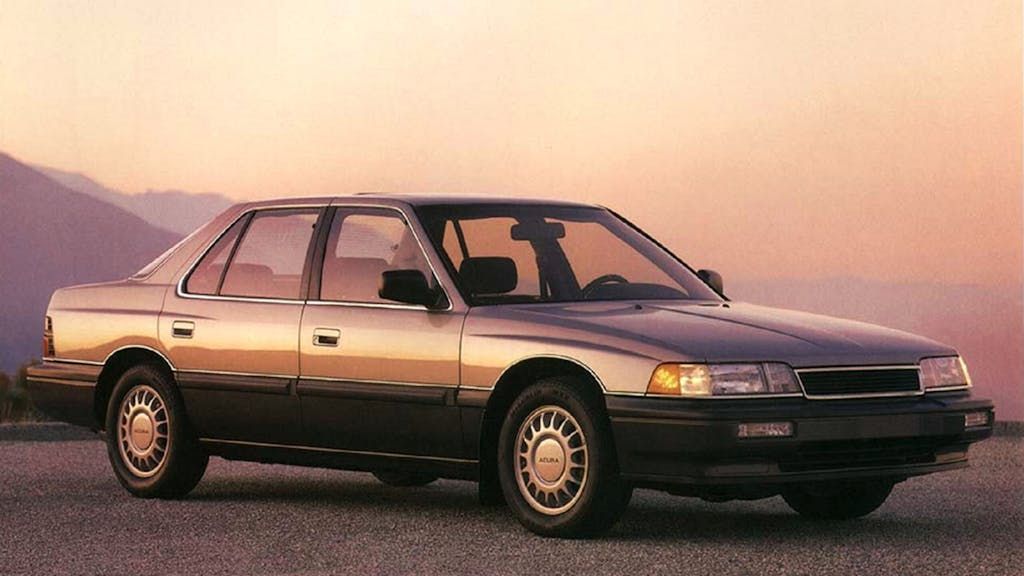
The Honda reference is to the Acura brand, one that was particularly close to my heart. My first car was a 1986 Legend, and I followed it up with a red 1994 Integra GS-R (I got more tickets in that car than any other before or since). Then came two TSXs, both with manuals: a first-generation TSX I loved and a second-generation one that felt like a downgrade. I cursed my practical sensibilities for buying it over a BMW 3 Series. When it was time to transition out of that second TSX, I looked to Acura first, hoping I could find something at Acura that hooked me the way my earlier cars had, but the lineup fell flat. After decades of Acura loyalty, I moved on.
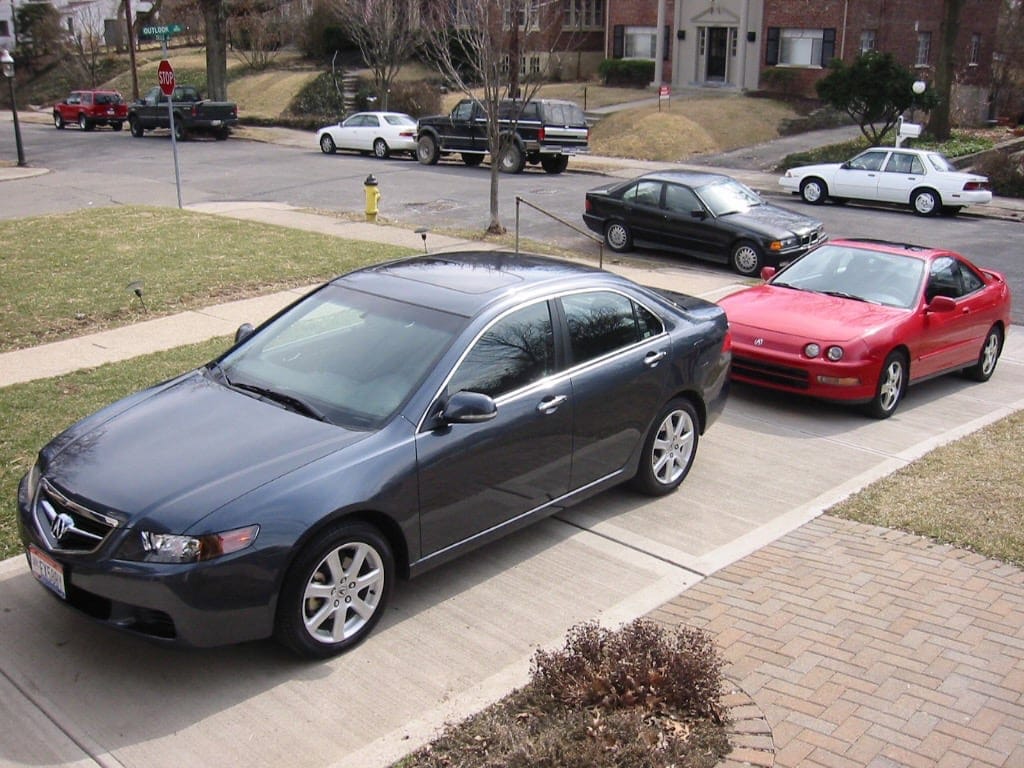
So, Doug’s take above, Acura’s strange cancellation of the RDX, and the brand’s other struggles got my attention, but didn’t surprise me. I’ve been thinking about how Acura’s decisions compounded over a long period of time—from the encouraging early years when my father bought the 1986 Legend that later became mine, to the peak mid-2000s period, to today.
Acura’s product line has had ups and downs over its 40 years, and some key model and lineup decisions over the years played a role in landing it where it is. Underlying the product decisions, though, was that Honda did not seem to treat Acura as a separate, higher-end brand system. I suspect this, more than anything else, shaped the product decisions that followed and helps explain why Acura’s strongest moves did not compound over time the way successful moves did for BMW, Mercedes, and Lexus.
Lexus is a particularly apt comparison: it is one of today’s leaders, it emerged from a larger mainstream automaker, and it launched in the same general timeframe as Acura.
Brand Building
With Acura, Honda set out to create an “intercept brand” to catch buyers ready to move beyond their core lineup to European luxury brands. Toyota’s intent was to create a leading luxury brand in Lexus.
Acura’s founding story, as told in Honda’s Acura History, is rational and practical, if not particularly inspiring: Honda wanted to hold onto Accord buyers who, as their income grew, sought more luxurious and powerful cars and graduated to European brands like BMW, Mercedes, and Audi.
In 1981, Honda was in the early planning stages for a larger sedan, known internally as HX. Honda determined that selling the HX as a Honda in the U.S. wouldn’t work:
The problem of selling such an expensive car through Honda dealerships was obvious. Not only would it overextend the already busy dealers (which sold on average 600 cars a year), customers would likely balk at the idea of such an expensive car wearing a Honda badge. Ultimately, Honda executives decided that the HX was simply too large and expensive to be sold alongside Civics.
Automotive News told the story of the Acura brand launch in a 2011 article, tellingly titled “Acura’s bargain birth.”
Resources and broader organizational support were thin:
Honda was a famously lean organization, so the decision to staff a luxury brand meant hiring from within. Ed Taylor was Honda's national distribution manager.
[…]
As he left Los Angeles for Tokyo on a two-month training stint in early 1984, Taylor was informed he would be in charge of a new division when he returned.
“Not everybody was all for this project,” said Taylor, who was named assistant vice president for the task.
[…]
Kurt Antonius, Honda's chief spokesman since the early 1980s, recalls his introduction to the new brand.
“Cliff pulls me into his office, and says, ‘Hey, we're launching a second channel, with a car with a V-6 for $20,000,’ Antonius said. ‘You have to do the press launch, the PR and media strategy.’ There were two of us in the whole PR department. I just about died on the spot.”
Acura operated on a shoestring as Toyota boldly entered the upscale market with Lexus:
Once Acura was launched with a complete field organization, it still kept its lean structure. Acura had been on the market for three years in 1989, while Toyota was still in the launch phase for its rival Lexus brand. Yet Lexus already had more employees.
“We didn't have a blank check to do it,” Taylor said.
Toyota was planning a move upmarket as early as 1983, and started with a bold vision, later expressed through the Lexus Covenant, which was presented to its initial 80 franchisees and later carved it into a granite block in Lexus’ headquarters atrium:
Lexus will enter the most competitive, prestigious automobile race in the world. Over 50 years of Toyota automotive experience has culminated in the creation of Lexus cars. They will be the finest cars ever built. Lexus will win the race because: Lexus will do it right from the start. Lexus will have the finest dealer network in the industry. Lexus will treat each customer as we would a guest in our home. If you think you can't, you won't. If you think you can, you will! We can, we will.
Launches and Expansion
The sales comparisons that follow focus on the U.S., which is Acura’s core market and a major premium-market battleground; for Lexus, BMW, and Mercedes, U.S. trends are not the whole story, but they are broadly representative of the stronger global positions those brands built.
Acura was effectively a regional channel for Honda from the beginning, whereas Toyota clearly envisioned Lexus as a global luxury brand.
Acura launched modestly:
Compared with today's lavish brand campaigns, Honda's launch of Acura was cheap, with just two weeks of teaser commercials before Acura went live.
“Frankly we didn't have time to stop and think about it,” Taylor said. “We were working jillion-hour days, six days a week, with a very modest budget.”
Acura launched with 150 dealers. In 1987 Acura won the J.D. Power and Associates Customer Satisfaction Index (CSI) Survey, and its dealer service score was the highest-ever at the time. It went on to receive the award four years in a row.
Lexus began selling in September, 1989. Lexus won what it called a J.D. Power and Associates “triple crown” in 1991 by finishing in the top spot in the Customer Service Index as well as the Initial Quality Survey and Sales Satisfaction Index.
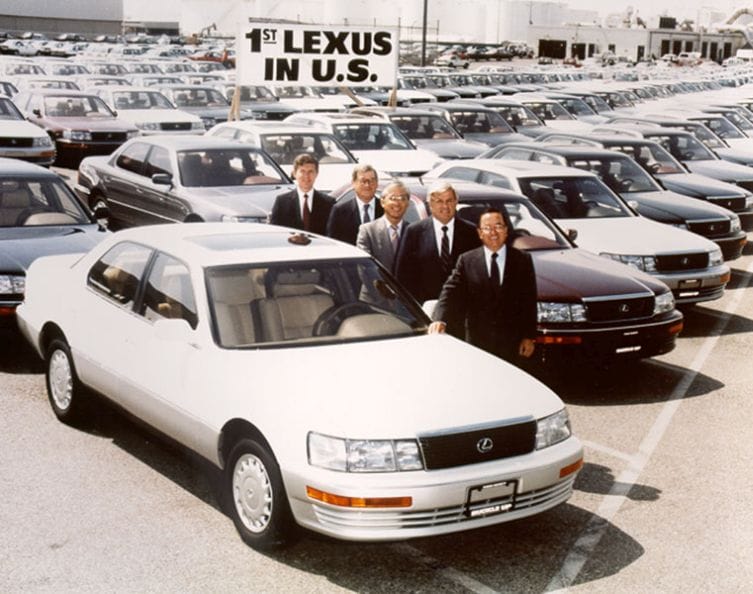
In Acura’s first year or so of operation, it was in two markets: the U.S. and Canada. Acura was in Russia from 2014–2016, selling roughly 2,000 cars over its final two years there before exiting. It entered China twice—in 2006 and 2016, finally exiting between 2022 and 2023, after peaking at around 16,000 on an annual sales target of 100,000. There are indications Acura entered or planned to enter Kuwait, Saudi Arabia, and the United Arab Emirates, though none are Acura markets today. Acura is now in four markets, having added Mexico and Panama to the original two.
Lexus was in five markets in its first year or so—the U.S., UK, Switzerland, Canada, and Australia—and subsequently began taking measured initial steps into several other countries, throttling the rollout to maintain quality standards as it scaled. Lexus gradually rolled out across Europe over the course of the 90s and had presence in most western European markets by the end of that decade. It launched the Lexus brand in Japan in 2005 (Lexus models were sold as Toyotas there prior to then) and expanded to 76 markets worldwide by 2010, including Malaysia, South Africa, Indonesia, Chile and the Philippines. Lexus today is in over 90 markets.
Global Brand vs. Regional Channel
Acura had flashes of brilliance, including the NSX, and strong products such as the first- and second-generation Legend, the Integra, the third-generation TL, and multiple generations of the MDX. These wins did not compound over time the way wins from Lexus and the other premium brands did.
Nor did Acura build the same reservoir of prestige. Acura could produce excellent individual cars, but the brand around them never gained the same accumulated authority as Lexus, BMW, or Mercedes.
The underlying reason seems to have been Honda’s limited investment in Acura as a true global marque. Honda did not build and support Acura as a global brand the way Toyota did with Lexus or the way BMW, Mercedes, and others built their own global premium marques.
The clearest evidence is market presence: Acura launched 40 years ago and today is sold in four markets. In practical terms, it has functioned less like a global premium marque than a regional channel for Honda’s premium products. Lexus, which launched a few years later, today is sold in more than 90. Toyota even brought its home market into alignment in 2005, launching Lexus in Japan with a dedicated dealer network after years of selling Lexus-market models there as Toyotas. BMW and Mercedes also have global footprints.
Investing in a global brand means defining a vision, then making that vision real for customers and employees alike. The brand has to shape culture, guide execution, and tell the organization what kinds of products and experiences it is responsible for creating.
This logic appears clearly in long-established brand strategy frameworks.
In Aaker on Branding, David Aaker says that brand vision should go beyond functional benefits to include “organizational values,” “a higher purpose,” “brand personality,” and emotional, social, and self-expressive benefits. A brand built this way cannot be reduced to a product spec or advertising line. It becomes a guide for the organization: what to build, what to emphasize, what to protect, and what kinds of compromises will dilute the brand.
In The Luxury Strategy, Kapferer and Bastien argue that a premium or luxury brand’s higher prices give “the whole company a sense of responsibility,” because everyone must find new ways to create value for the customer, and conclude that the company has to “live up to the price.”
Taken together, the two frameworks support the same conclusion: a high-end brand should guide product planning, engineering priorities, pricing, retail experience, service standards, and the compromises an organization is willing to reject.
This is where Acura’s lack of independence from Honda undermined the brand. Honda sold several Acura models outside Acura markets as Honda products. The most consequential example was the flagship sedan line: the Acura Legend, RL, and RLX were sold in several other markets as the Honda Legend. That approach may have made sense for Honda, but it weakened Acura as a brand system.
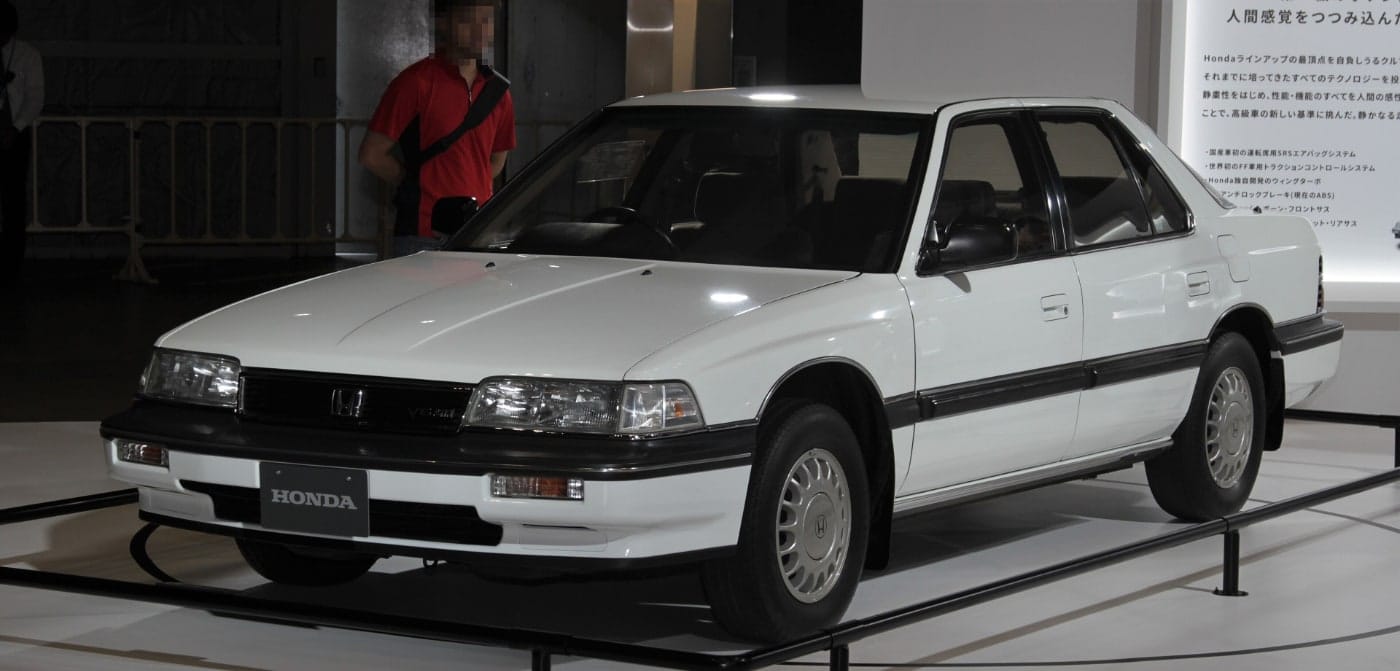

The issue was not Acura’s use of platform sharing. Lexus, Audi, Porsche, and other premium brands have all relied on shared platforms, components, architectures, and corporate resources. Shared resources become a problem, though, when the premium brand is not independent enough from the parent company’s broader product priorities, even when those priorities conflict with the premium brand’s needs.
Acura did at times produce vehicles that felt distinctly Acura-centered, with the MDX being the clearest mainstream example. But those efforts were too inconsistent—and too limited where they mattered most—to amount to a durable Acura brand system. Too often, especially at the top of the lineup, important models also had to serve Honda’s broader global product priorities, dealer structures, and market needs.
Acura’s needs therefore had to be balanced against Honda priorities that were not always aligned with Acura’s own. Over time, this dynamic undermined Acura on multiple levels and, in the case of its flagships, resulted in a line that became increasingly uncompetitive until it was no longer viable.
Flagships
Opening Statements
The initial flagships for Acura and Lexus were their introductory statements about and customers’ first impressions of each brand. Honda and Toyota’s development of the first Acura Legend and Lexus LS400 models mirrored their respective brand-building approaches: lean and pragmatic for Acura, uncompromising for Lexus.
Honda engaged in a joint venture with Britain’s Rover Group.
Ate up with Motor described the reasoning behind the partnership in a 2014 retrospective:
If Honda were to develop a bigger car, it made sense to collaborate with a partner more familiar with larger vehicles. As clever as Honda’s engineers were, they had no practical experience with the structural engineering of big executive cars; most of Honda’s water-cooled production models to that point had been essentially scaled-up or scaled-down versions of the original Civic.
Honda seemed to feel its way through understanding its prospective customers and the broader market. Again from Acura’s bargain birth:
"I had to test the airbags in the Legend coupe for the media—twice," Antonius said of the spartan affair in Palm Springs. "I had bruises for weeks. But the press reaction was very important. It was the first outside reaction that we were on to something.”
Not that everything went smoothly at launch. Honda executives were unsure how luxurious Americans wanted their first upscale Japanese car to be. The first Legend's mix had a large percentage of cloth seats and manual transmissions.
In contrast, Toyota sent 20 engineers to Southern California to study target Lexus customers. The project lead gave the team these instructions:
"When you arrive in the United States, rent a car, and drive to the coffee shop. Order a cup of coffee and then just sit back and observe the customers. Listen to what they say, watch what they do. You must see, touch, and feel everything yourselves."
The team lived in the U.S. for months, interviewing hundreds of wealthy Americans. They even built a mockup American home in Japan.
Big Car’s Lexus LS Story reported Toyota spent $1 billion over six years, involving 60 designers, 1,400 engineers, and 2,300 technicians. It produced 450 prototypes and logged 1.7 million test miles globally.
Honda’s experience was with front-wheel drive, and it carried that layout into the Legend, pairing it with the company’s first production V6 engine. Toyota benchmarked the leading European luxury sedans of the time, particularly the Mercedes-Benz S-Class, BMW 7 Series, and Jaguar XJ, and determined rear wheel drive and a V8 powertrain were needed to be a legitimate leader.
Receptions and Trajectories
The first generation of the Legend was generally received well and sold solidly. Some initial reviews, though, provided early indications Acura may not have aimed high enough.
From MotorWeek’s review of the 1986 Acura Legend and Integra:
Here’s the rub: The $19,298 Acura Legend doesn’t do anything much better than the $12,675 Honda Accord LXi. The most noticeable cosmetic minus is the gaping grill opening where a big “H” should reside. You see, Acura models are sold in Japan. Also, the Legend’s six additional wheelbase inches don’t provide much more interior space than in an Accord, so rear legroom is just adequate for adults.
Not only that, performance also seems Accord-like and, unlike most of its European competition, the Legend just doesn’t get our juices flowing. It’s a very, very nice car, but maybe just a bit boring.
The second generation was a meaningful step forward, though it didn’t directly compete at the upper end like the Lexus LS400. Despite Car and Driver calling it “a fast, beautifully crafted new rival to Lexus and Infiniti” in its 1991 Acura Legend road test, the publication compared the Legend against midsized BMW 5 Series and Mercedes E-Class models in a 1991 comparison, not the flagships the Lexus was pitted against. It won against those midsize competitors.
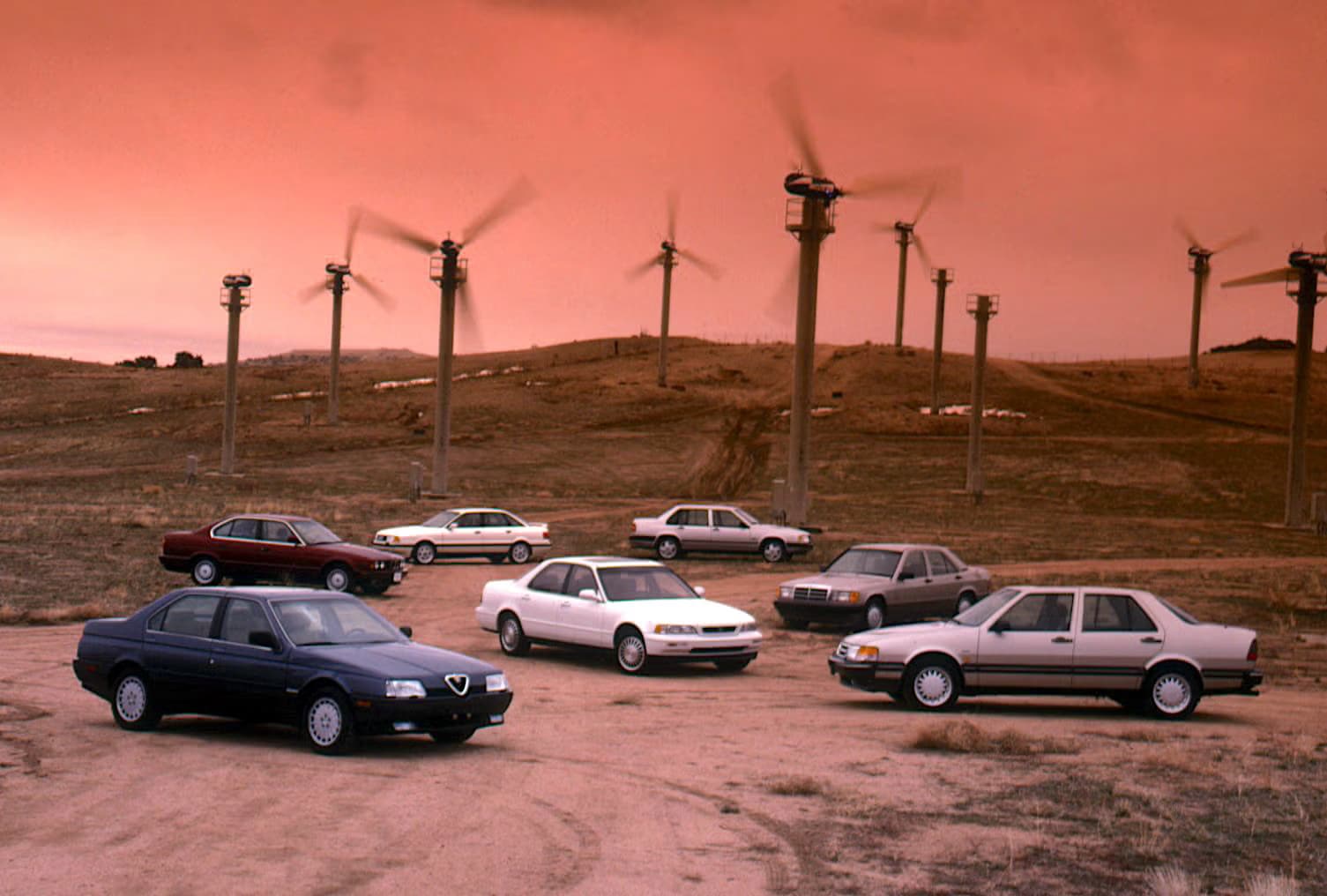
1991 was the Legend’s best sales year: Acura sold 65,689 second-generation models.
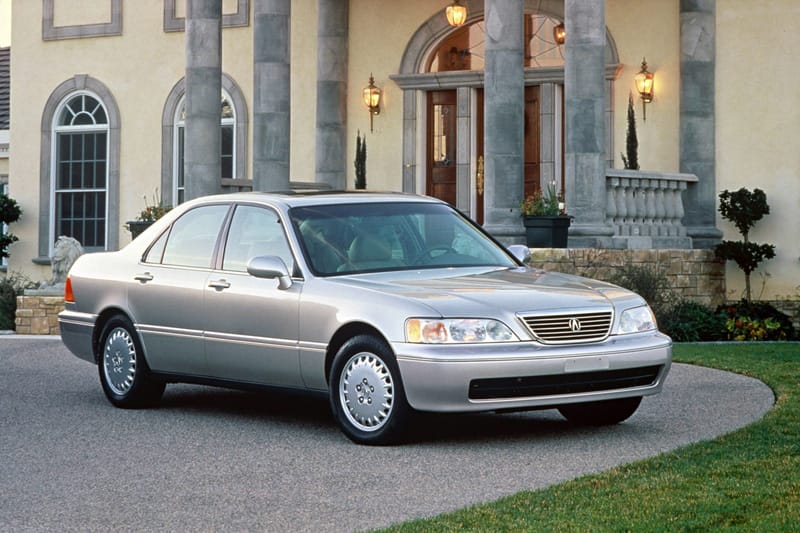
By the third generation—renamed 3.5RL to align with Acura’s larger shift to an alphanumeric naming convention—the flagship lacked identity and was increasingly uncompetitive in a more demanding market.
Car and Driver recounted the third generation’s trajectory in a 2001 model refresh review:
It was a copy of its rival, the Lexus LS400, which was a copy of Mercedes' luxury sedans. Acura was following and floundering, trying to capture some of the Lexus magic. But the RL lacks the Lexus's V-8 power, rear-wheel drive, roominess, and remarkably smooth and silent operation.
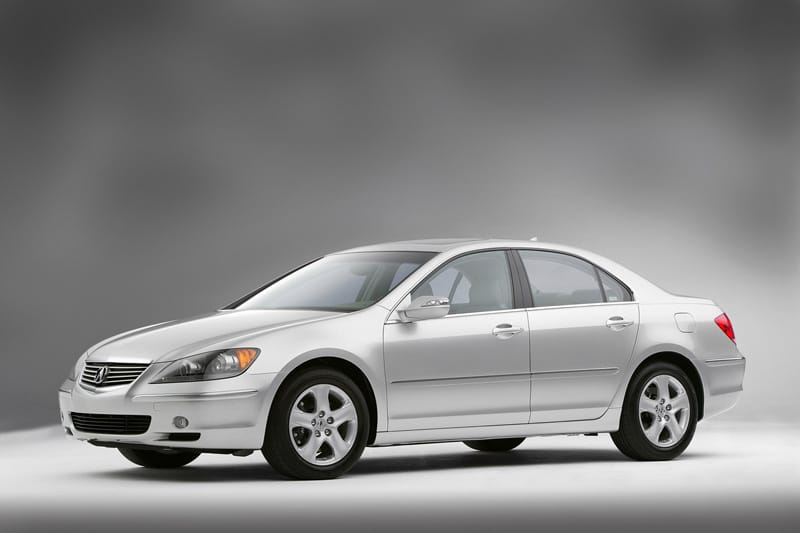
The fourth-generation RL, launched as a 2005 model, laid bare Honda’s lack of investment in an Acura-specific flagship program and larger alignment problems. While models typically follow a size and sophistication hierarchy—compact, mid-size, flagship, each successively larger and with more luxury and technology—the RL, while technically impressive, was effectively the same dimensions as the lower TL model, and had less trunk space.
This peculiar scenario was likely due to the RL having been designed as part of Honda’s global Legend program and the TL having been designed specifically for Acura and the North American market. The TL being designed specifically for Acura was an encouraging, if incomplete step, given the TL and RL slots collided due to misalignment between Acura and Honda global priorities.
The fourth-generation RL was also significantly smaller than Lexus’ flagship and continued to lack a V8 engine. Acura let this generation languish through the 2012 model year; it sold only 379 units its final full year on sale.
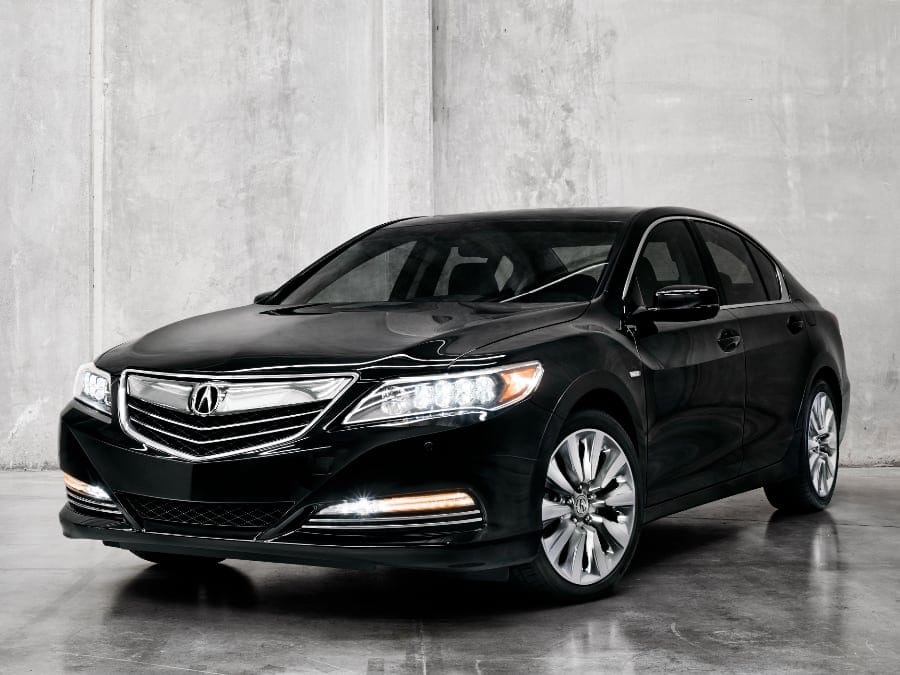
Acura’s final flagship, the RLX, was launched for the 2014 model year. It was meaningfully larger than the TLX (which replaced the TL), but after selling just under 5,000 units in its first year on sale, it never sold over 2,000 after 2015. It was discontinued in 2020.
Lexus used the LS to build and reinforce a reputation of incredibly high quality and refinement, exemplified in its iconic “Balance” advertisement:
The LS400 began selling in September 1989 and won a December 1989 Car and Driver comparison test against six competitors.
The publication was thoroughly impressed:
Who would have guessed? Toyota, in its first time at bat in the major leagues, slams one out of the park. The LS400 is a formidable stroke. This car scored highest in six categories and topped the "overall" ballot by a clear margin. Every staffer loved it.
[…]
There are countless details in a luxury sedan. Lexus, particularly, seems to have lavished attention on every one of them.
The LS400 then scored third in a November 1990 “Best Sedan in the World Regardless of Price” comparison test against a Bentley Turbo R (which it beat), Mercedes-Benz 560SEL, and BMW 750iL. These were the top of the top-of-the-line at this point—the Bentley was priced at $170,852—so the mere inclusion of the $44,700-as-tested Lexus was a statement.
The conclusion:
The combination of a comfortable interior, a silky 250-hp double-overhead-cam V-8, and an almost supernatural attention to detail makes the LS400 at home in any company, including this aggregation. What can we say? We were surprised, and then again, not so surprised. The Lexus may not be the car you want to arrive in, but it may be the car you'd like to drive there in.
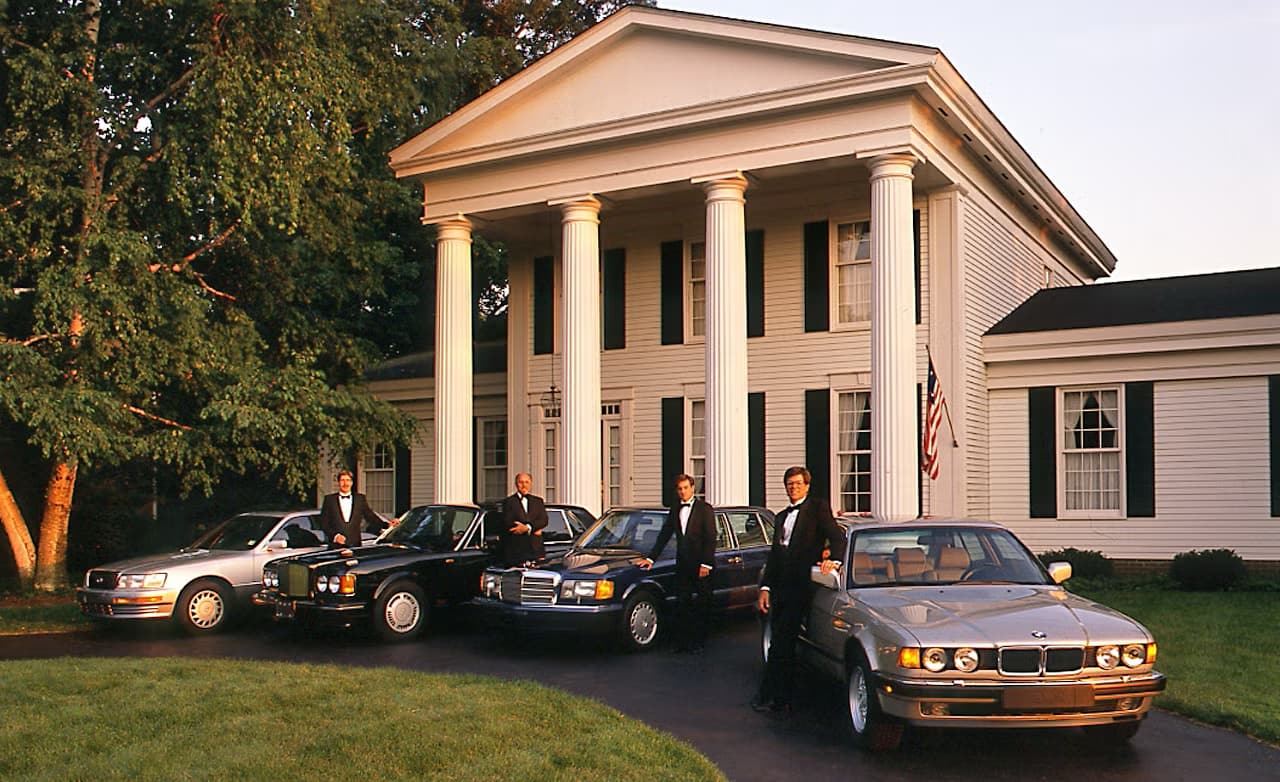
There is no mention of Acura—the first Japanese entrant in the segment just a few years earlier—in either comparison test.
The significantly more expensive Lexus LS passed Acura’s flagship sedan sales in 1995—23,657 to 18,159—and Lexus only increased the gap over time.
Flagships are what a brand stands for, the proving ground for its future, and the lens through which customers interpret the rest of its lineup. Acura executed the first two generations of the Legend strongly but conservatively, and by the third generation its models were inconsistent and uncompetitive. The original LS400 was a strong statement of intent that Lexus reinforced over several generations.
Halos, Names, and Peaks
The NSX
The Acura NSX arrived for the 1991 model year and was a revolution both for Honda and the Japanese automobile industry. Honda gave Acura a mid-engine, aluminum-bodied sports car with exotic proportions, racing credibility, and everyday livability.
This combination was revolutionary because the NSX did not try to win by being more temperamental, more dramatic, or more intimidating than the Ferrari, Porsche, Lotus, and other exotic cars it challenged. It tried to prove that an exotic car could be engineered with the same discipline, reliability, ergonomics, and usability that defined Honda at its best.
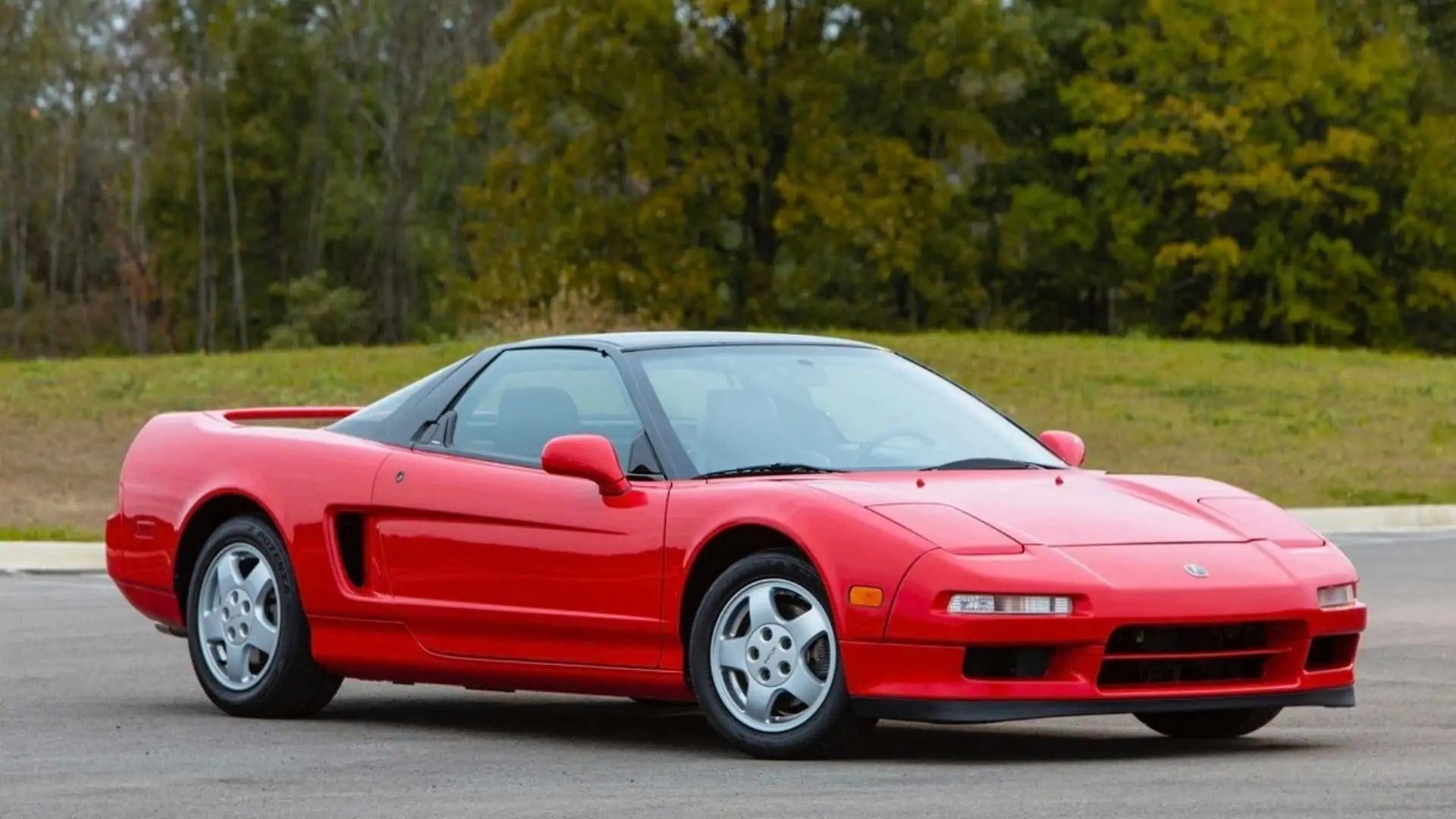
The NSX won Car and Driver’s “Five-Way 1990 Sports Car Shootout”, beating out a Porsche 911, Corvette ZR-1, Ferrari 348, and Lotus Esprit Turbo.
Car and Driver was smitten:
The NSX will make a profound change in the market for Eroticars. Because, apart from the near-$60,000 price, there is no hardship to driving this car. Getting in and out is easy. The ride is fine. There are no bad noises. The climate control works flawlessly. You can have an automatic transmission and power steering if you want.
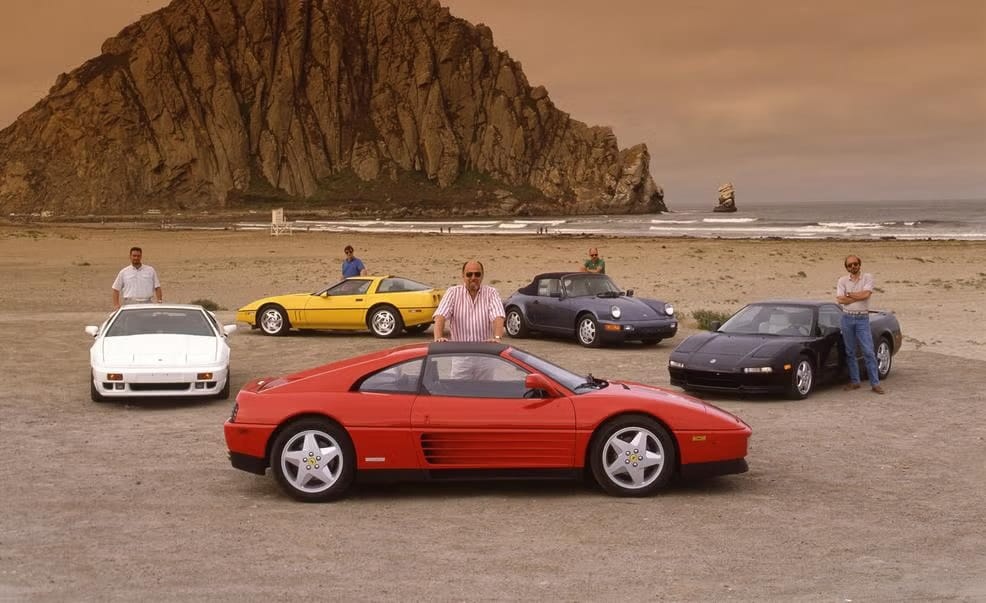
Jason Cammisa’s NSX retrospective highlighted why this approach didn’t work in the exotic car market:
Ironically, it might have been the NSX’s inherent goodness that was its biggest flaw, because to some it had committed the cardinal supercar sin: the NSX was boring.
He continued:
The NSX was a library card: a rational, intelligent car. Problem was, buyers already had one of those in sedan form, with things like power steering and a back seat. Turns out when they were looking for a supercar, all that mattered was a thrill.
[…]
Honda had engineered a Ferrari for Accord buyers who were, importantly, not Ferrari buyers.
The benchmark for the NSX should not have been volume. Its key role should have been as a halo car for Acura. A halo car is less about sales and more about making a lineup feel credible and desirable. An Acura halo sports car doesn’t have to beat Ferrari or Porsche at their own games. It needed enough credibility in the exotic-car market to elevate Acura in the eyes of its own buyers. It could run with them on performance, uniqueness, and other qualities while remaining distinctly Acura, building loyalty among Acura buyers and broader enthusiasm for the brand.
A halo car should express a brand’s point of view—what it believes at its highest expression. Based on the NSX, that meant Honda engineering expressed through Acura: innovation, precision, usability, and performance at the highest level the company could credibly reach.
It should also create aspiration for mainline models like the Legend or TL, which should feel more special by association. A halo should signal the brand’s engineering seriousness, validating its engineering claims and pointing the way forward for the broader line, and should ensure that the rest of the lineup expresses the design and engineering principles underlying it.
A halo car also creates a sort of durable, consistent memory that should support the brand through the natural ups-and-downs of product cycles. Done well, people will remember a halo car and associate it with the brand, even as other models come and go or endure a down-cycle.
Likely due to its limited brand system, Acura did not translate the many brilliant qualities of the NSX into a coherent premium or performance hierarchy. The Legend gradually lost both coherence and competitive relevance, particularly as it transitioned into the RL, and Acura’s sport sedans became increasingly untethered from the brand’s original character.
Acura’s follow-through on the first-generation NSX was weak. It remained on the market for 15 years, through 2005, with only modest updates, rather than being developed more aggressively as the halo at the top of a durable Acura performance hierarchy.
After a 12-year gap without a true halo car, Acura revived the NSX for 2017. By then, however, the brand had far less momentum for the car to amplify. The second NSX was impressive, but it was trying to lift a brand system that lacked the clarity, hierarchy, and aspiration the original NSX should have helped create.
Legend No More
Acura announced in early 1995 it would replace the names of all models except the NSX with alphanumeric names.
Acura executive vice president Rich Thomas provided a revealing insight:
“The hardest decision is on the Legend,” Thomas said. The Acura flagship’s owners don’t identify their cars as Acuras, he said, they call them Legends.
Acura saw this as a problem for the brand:
[Acura] shifted its lineup away from well-regarded names like Legend and Integra in favor of alphanumerics when, as executives have said, it became clear to product planners that customers knew the individual cars better than the brand itself.
Acura identified a real weakness: the cars made an impression, but the brand did not. This was in contrast to brands like Lexus, whose identity was transmitted through the LS400—often referred to simply as “a Lexus”—and reinforced by a carefully constructed ownership experience.
The name change was implemented for the Legend with the third-generation model, which struggled in the market. Acura removed valuable name equity from a model when it needed it most, and didn’t replace it with a stronger brand.
The move was defensible as a diagnosis. But on its own, without the deeper changes needed to strengthen the brand, it was not a net positive. Without addressing those structural issues, Acura would likely have been better off keeping the model names, which at least carried familiarity and credibility.
Acura itself has since acknowledged the value of that early model-name equity, reviving the Integra name in 2023 for a new generation model—the logical successor to the original.
The insight behind the renaming was sound. But without a stronger brand system beneath it, the change asked the Acura name to carry more weight than it could support. Acura’s return to the Integra name nearly three decades later reinforces that the underlying issue was never fully resolved.
Peak Acura
Acura’s U.S. sales peaked at 209,610 in 2005. By that point it was growing more slowly than Lexus, which had started later and sold 302,895 cars in the U.S. that year. BMW and Mercedes also outsold Acura in the U.S. and were growing faster.
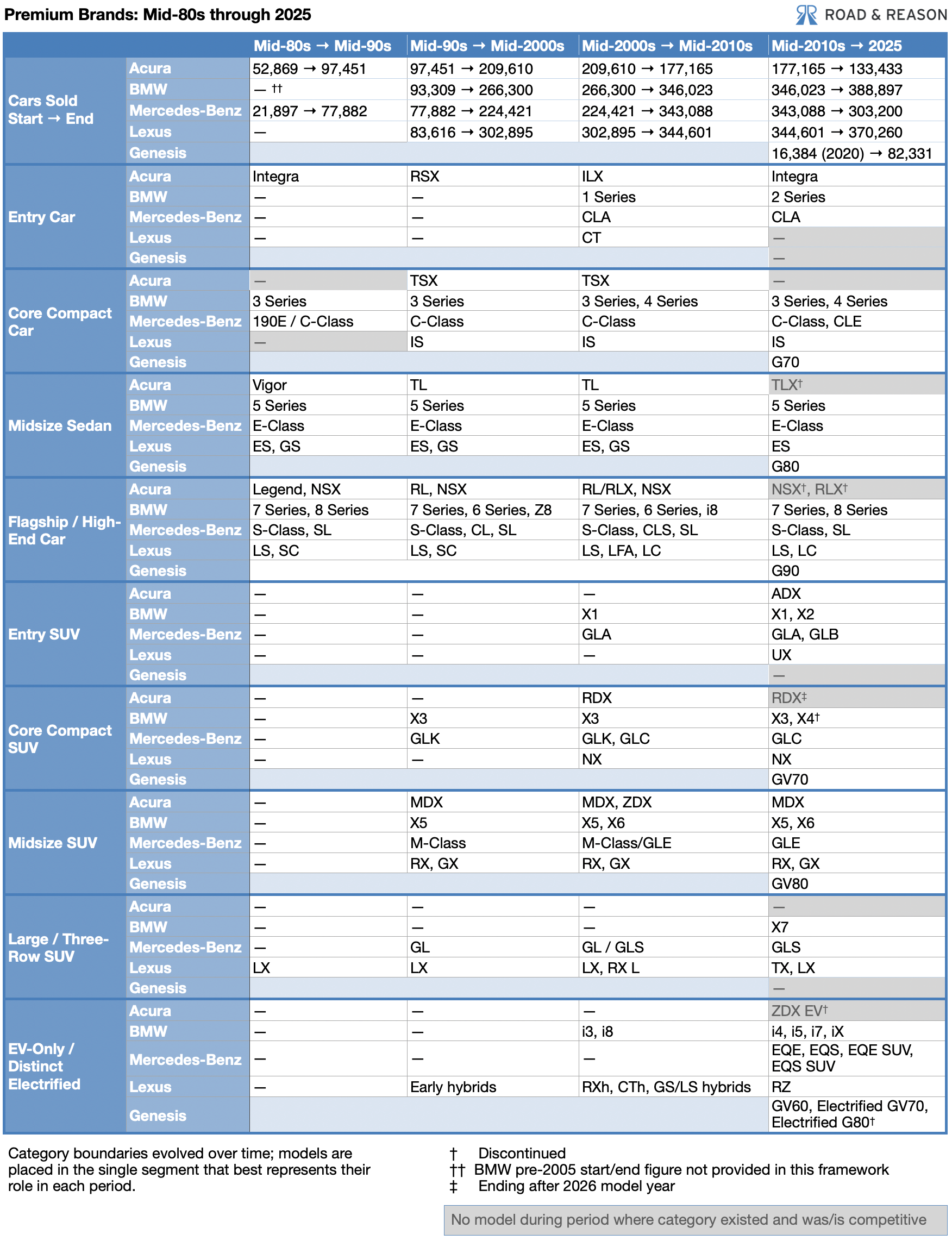
Acura had a strong lineup in 2005, led by the highly popular third-generation TL and newly introduced TSX and the successful MDX midsize SUV. Cars were still dominant for Acura and most of its competitors at this point, though Lexus was an exception due to its hit RX SUV.
The TL midsize sedan was the highlight of the 2005 peak, accounting for 78,218 sales. It hit the sweet spot of the midsize sedan market of the time. Sold in a single, fully-loaded configuration, it was considered an excellent value compared to European competitors like the BMW 3 Series and Mercedes-Benz C-Class, was powerful (270 horsepower), included technologies that were leading and in some cases firsts for its segment (multi-channel DVD audio, Bluetooth hands-free phone system, integrated navigation), and was considered reliable and easy to live with.
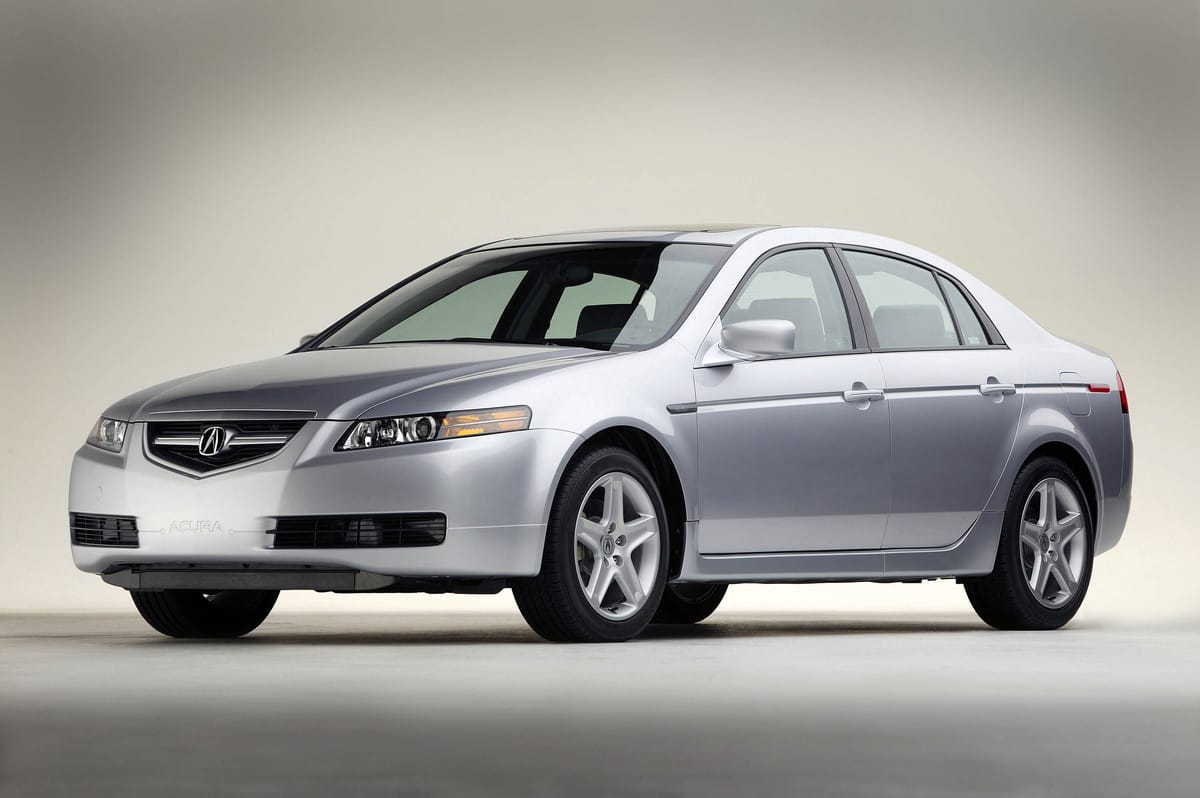
Consumer Reports said the TL provided “an excellent blend of comfort, convenience, and sportiness.” Car and Driver ranked it third in a March 2004 “near-luxury” sport sedan comparison that included the Audi A4, BMW 325i, Infiniti G35, Jaguar X-type, Lexus IS300, and Saab 9-3. It landed behind the Infiniti G35 and BMW 325i, with its primary criticism being it was front wheel drive while several competitors were rear wheel drive. The rear-drive complaint was repeated by multiple reviewers.
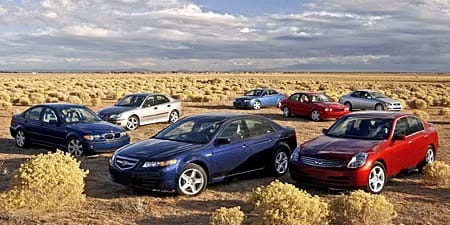
A follow-on October 2005 Car and Driver sport sedan comparison test placed it mid-pack against a mix of the previous test’s rivals and some new ones. It placed behind redesigned BMW 3 Series and Lexus IS models—the prior-generation IS had landed behind the TL in the previous test—and the Infiniti G35. The redesigned IS was rear-drive, was the fastest from zero to 60 mph, had the most horsepower in the group (301), and received praise for its Lexus-typical fit and finish. The competition was intensifying.
TL sales slipped in 2006 and fell more sharply in 2007, but some decline was expected. The third-generation car was aging, competitors were responding, and the initial demand wave had passed.
The cracks started appearing with the redesign. Sales fell from 58,545 in 2007 to 46,766 in 2008, a transition year between the outgoing third generation and incoming fourth generation, then dropped again to 33,620 in 2009, the first full year of the new car. A successful replacement normally restores at least some momentum. The fourth-generation TL did not.
This marked a permanent decline; sales remained in the 30,000 range through 2012, before dropping to 24,318 in 2013, the final full year the fourth-generation TL was sold.
Comparable Lexus sedans also declined as their generations aged, but recovered more clearly after redesigns. The second-generation IS, launched for model year 2006, sold 54,367 in its first full year on sale. Its sales were down to 29,803 in 2012, its final full year, but were up to 52,358 in 2014, the following generation’s first full year. The Lexus ES sold 82,867 in 2007, dropped to 59,155 the last full year of that generation, and then sold 72,581 the first full year of its next generation.
Ultimately the sedan segment was beginning its decline, but Acura’s decline was more sudden and severe than competitors’.
This was partly because the fourth-generation TL was a more complicated successor entering a stronger field than the third generation car had faced in 2004.
Consumer Reports considered the fourth-generation TL a step back:
This revised version of the Acura TL is a nice car, with responsive handling, a slick powertrain, and commendable fuel economy. But when compared with the previous TL, the redesign is not as impressive. Vague steering saps the fun out of its handling and the trunk opening is small.
Reviewers called out what they characterized as polarizing exterior styling, with Car and Driver saying, “It’s possible that potential buyers could be turned off by its funny face.”
Compounding these issues was Acura’s structural weakness: the brand experienced less repeat-purchase behavior than its strongest competitors. In J.D. Power’s 2008 Customer Retention Study, Acura retained only 37.0 percent of returning buyers, compared with 60.4 percent for Lexus. That gave Lexus a much stronger base of repeat customers as its models aged, while Acura had less built-in demand to offset normal model-cycle decline, intensified competition, and a poorly received redesign.
That loyalty weakness became more damaging as the market shifted to SUVs. Acura’s own center of gravity was moving from the TL to the MDX, and the broader luxury market was beginning to migrate away from sedans. A brand with stronger owner loyalty could have converted more of that sedan demand into crossover demand within its own lineup. Acura captured some of it, but not enough to offset the TL’s sudden and permanent decline.
The third generation TL had shown how successful Acura could be when product, price, technology, and reliability aligned with the market. The fourth-generation TL showed how vulnerable that success was when the product became less broadly appealing, the market was beginning to move away from sedans, and the brand underneath it was not strong enough to help carry the car.
Acura’s 2005 peak and subsequent drop-off were the first clear signs of the brand’s structural weakness. By then, Acura and its competitors had had enough time to grow into themselves, and their trajectories were beginning to diverge. Acura could produce excellent products and real commercial success, but its success rested on a weaker foundation—one that was not strong enough to keep those gains compounding once the market shifted and key products faltered.
Acura Today
Today’s successful premium brands are executing well on a variation of the same portfolio formula: broad, layered, and SUV-heavy. The strongest marques have representation in each category, and each category has sales and/or broader strategic significance that supports and reinforces the brand.
Compared to the most successful brands, Acura’s lineup is thin:
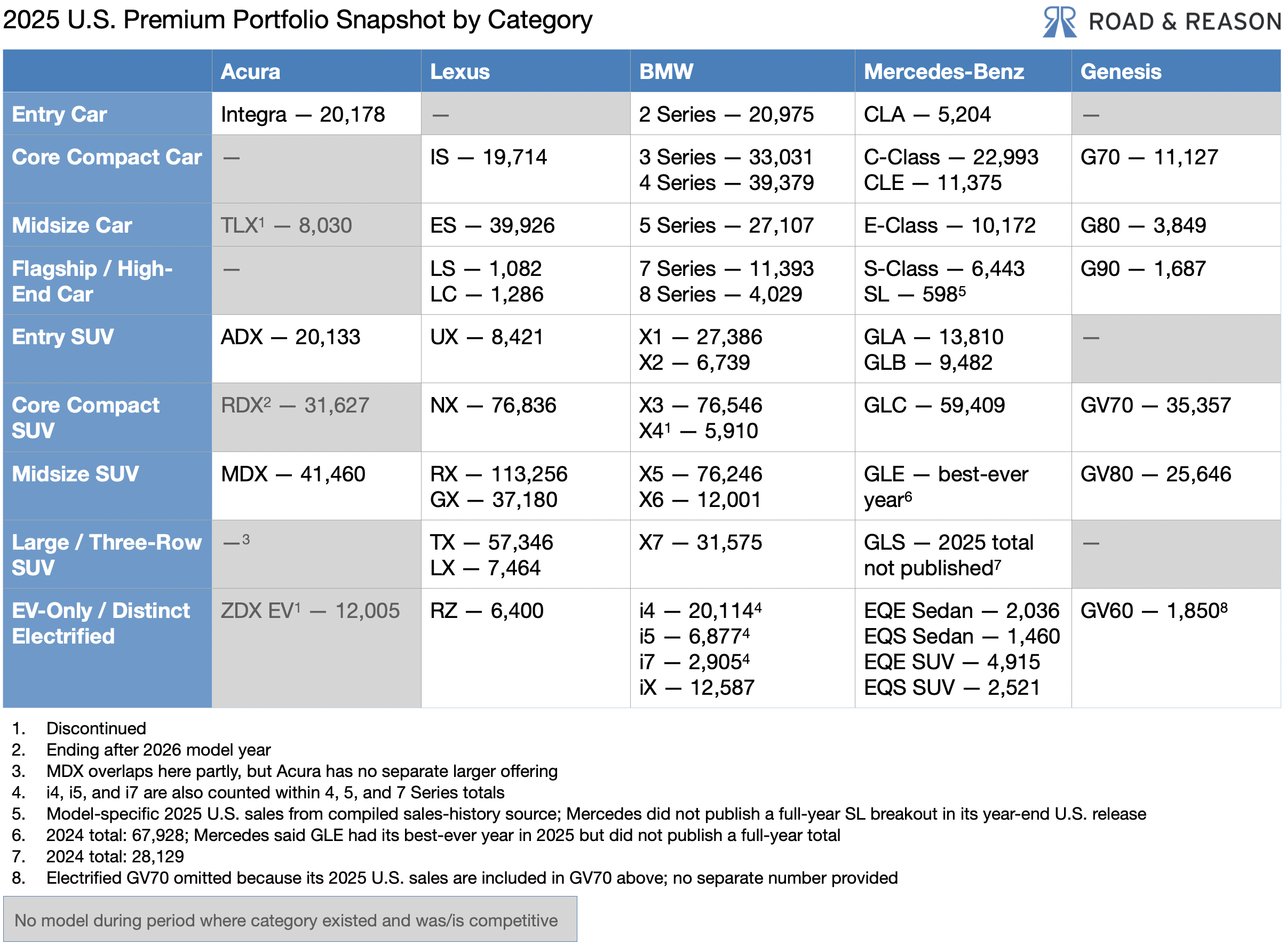
While the others have expanded, Acura has contracted. The RLX, its final flagship attempt, disappeared after 2020. The second-generation NSX ended in 2022. The TLX, which itself represented a thinning when Acura merged the TSX and TL into one model for 2015, was removed from the lineup in late 2025. And now Acura is set to lose the RDX, its core compact SUV volume driver, while the GM-based ZDX EV was discontinued after roughly a year in production.
In the segments where Acura still competes, it places but does not lead. The MDX, its bestseller, is spread thin: size- and spec-wise it is most logically a midsize SUV, though its three rows let it argue for a place in the Large category. It is also being asked to stretch into the minds of compact buyers to cover the RDX’s absence.
This is happening as MDX sales have been shrinking:
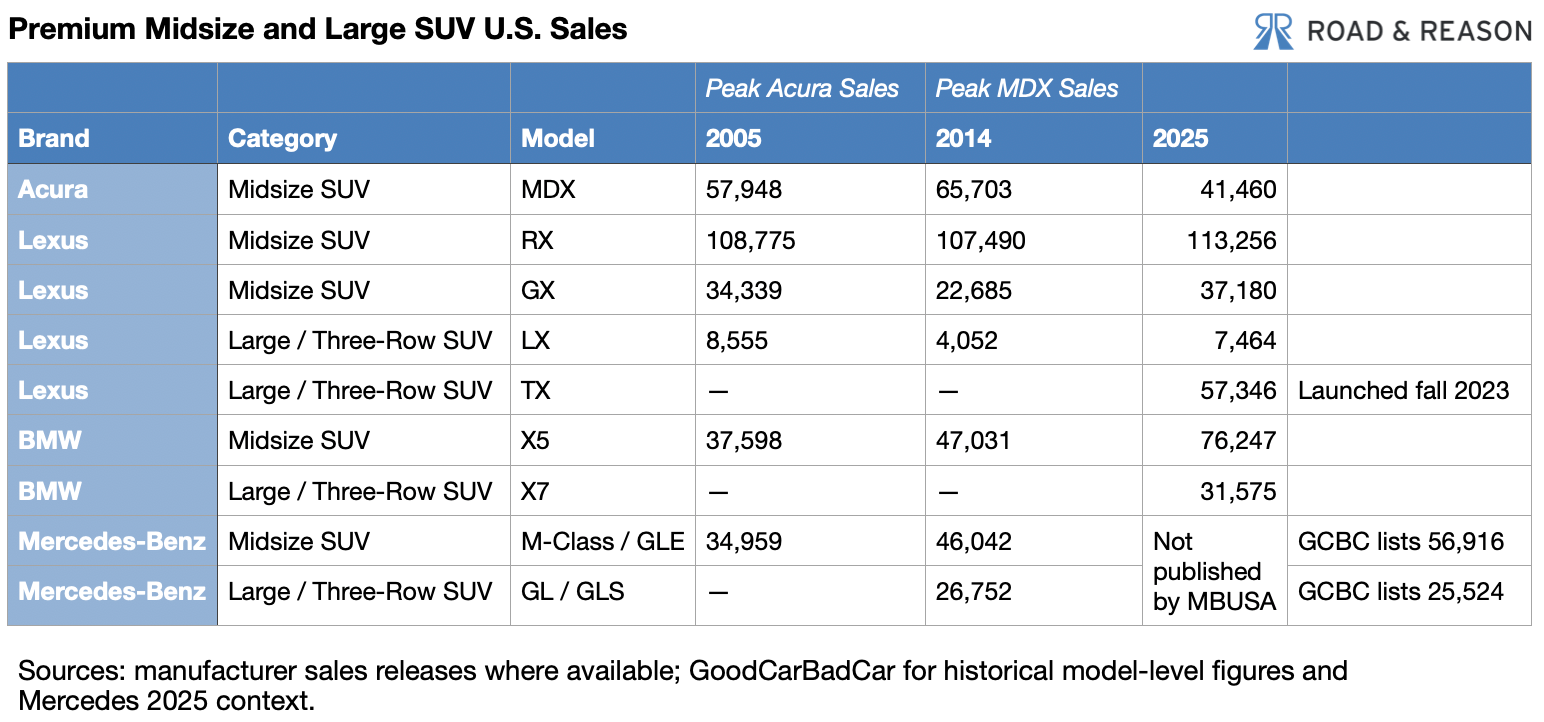
The MDX represented strongly at Acura’s 2005 U.S. sales peak: at 57,948 units, it outsold the more expensive BMW X5 and Mercedes GLE models, as well as the Lexus GX. It peaked at 65,703 sales in 2014, still ahead of those other models, though by then its growth rate had already begun to lag. 2014 was the third-generation MDX’s first full year on sale—typically a strong year for any model—so sales naturally dropped following that point, recovering somewhat to 60,057 in 2021, when the fourth generation launched.
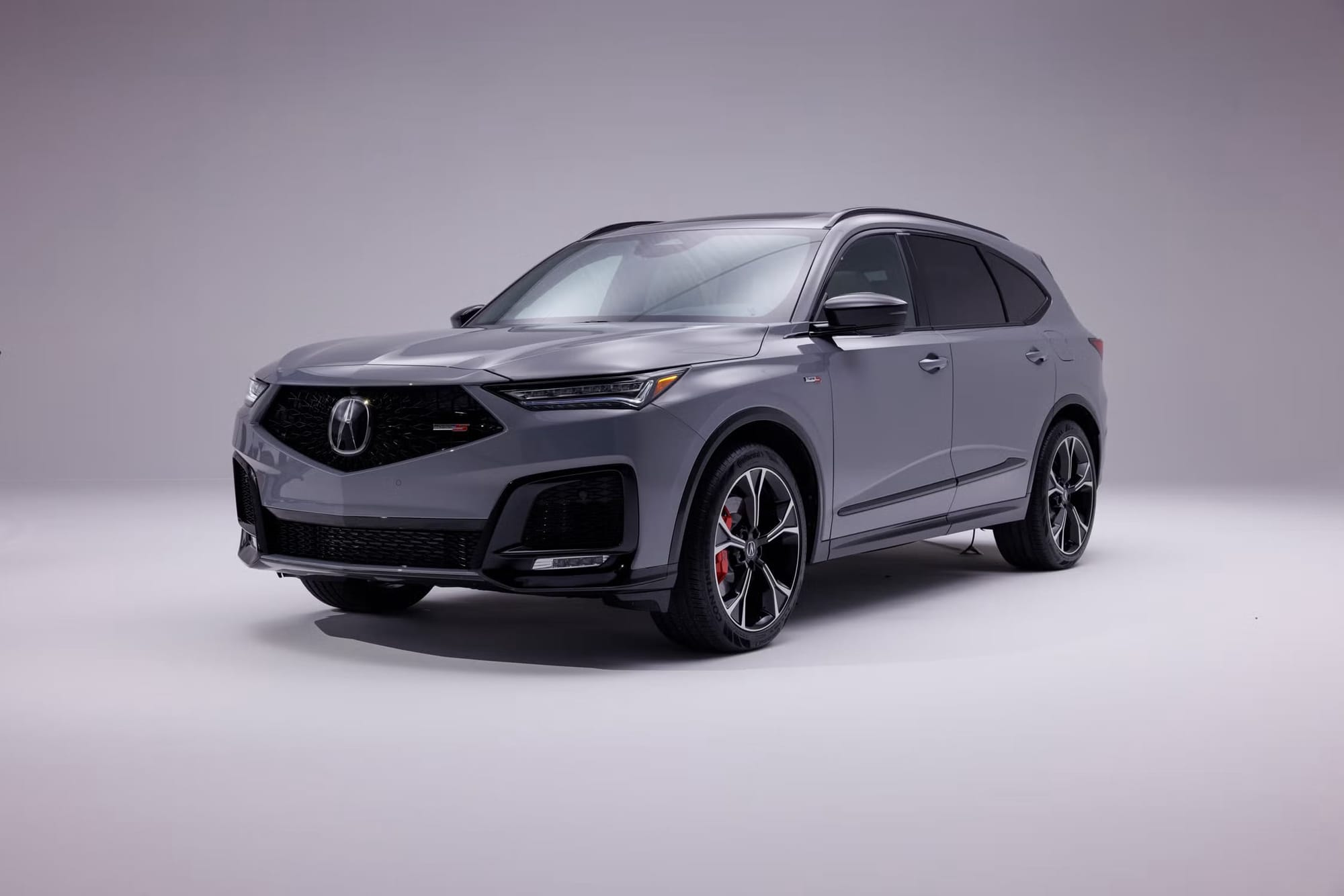
The MDX’s 2025 U.S. sales total of 41,460 units, though, marks a sharp drop for what has become Acura’s central pillar.
Lexus’s launch of the three-row TX is one likely culprit: with 57,346 sales in its second year, it is a compelling direct competitor from a stronger premium brand.
BMW and Mercedes have also expanded their lineups since that 2014 milestone. The BMW X5 and Mercedes GLE now both significantly outsell the MDX. Each of these models also spawned standalone three-row variants (the X7 and GLS) with respectable sales footprints.
Kelley Blue Book compared the 2025 MDX directly against the Kia Telluride, a sign MDX faces low-end pressure as well. A mainstream three-row SUV can now sit close enough to Acura’s core product in size, power, safety, technology, and perceived luxury that the two can end up in the same shopper conversation.
The MDX is a historically strong product facing intense competitive pressure, but Acura’s weaker brand leaves it with less cushion than stronger rivals enjoy.
Lexus offers a useful counterexample: a stronger brand helping sustain an aging product. The IS last received a full redesign for 2014, yet it still sold 19,714 units in 2025—more than the TSX sold in its final full year, more than any TLX year after 2021, and more than twice 2025 TLX sales. The TLX had a refresh, a redesign, and another refresh over that same span. The IS had refreshes, but no redesign, and still outsold it. That is what stronger brand equity can do for an aging product.
What once looked like a deep enough lineup to absorb shifts in consumer preference and competition is now smaller and more exposed. Acura today reflects the compounding result of a weak brand system: a thinner lineup, fewer pillars, slowing sales of its strongest models, and too much resting on what remains.
Irony and Missed Opportunity
There is an irony in using Lexus as the contrast to Acura: the LS, the flagship sedan that did more than any other product to define Lexus as a brand, is slated to exit after the 2026 model year.
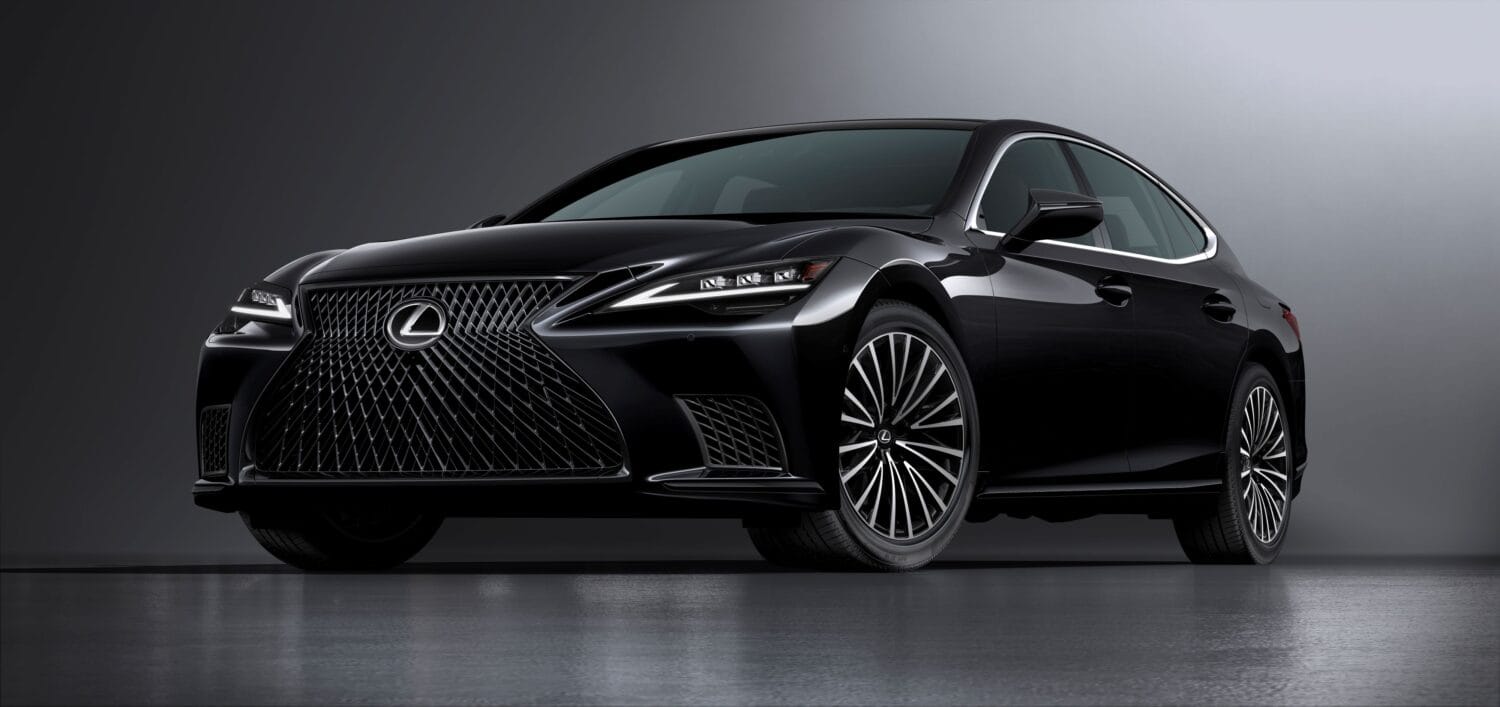
For much of its life, the LS sold competitively in the U.S. against the BMW 7 Series and Mercedes-Benz S-Class. LS sales entered a steady decline around 2014. The fifth-generation car arrived for 2018 with a new shape, a new platform, and a twin-turbo V6 in place of the LS’s traditional V8, producing a brief rebound before the decline resumed.
The LS decline was not simply a reflection of the weakening luxury-sedan market. The S-Class and 7 Series are long past their peaks, too, but both have remained viable flagship lines in a diminished segment. Mercedes and BMW continue to treat them as central expressions of brand authority, technology, and executive luxury, with both receiving significant updates for the 2027 model year.
The LS followed a different path: not merely from peak to decline, but from defining flagship to increasingly marginal product as Lexus’s center of gravity moved elsewhere. The RX and the broader SUV shift became the anchor of Lexus’s business, while reliability, comfort, hybrid leadership, dealer experience, and customer trust became the enduring qualities of the brand. The LS once told the Lexus story better than anything else in the lineup. By the mid-2010s, the Lexus story was effectively ingrained in the brand.
This raises the question of whether luxury brands still need flagship sedans, halo models, or both—or whether those roles are migrating elsewhere: to SUVs, electric vehicles, ultra-luxury variants, technology platforms, or even the ownership experience itself. A premium brand still needs some durable source of coherence. Lexus suggests that coherence may not always have to take the form of a flagship or halo.
That is the difference between a durable brand system and a fragile one. Lexus could transcend the fading of its founding flagship because it had built a durable brand system around the promise the LS helped establish.
Acura never reached that same point. Its best products were compelling and innovative, and they won customers, but Acura never created the kind of brand system that turns those product wins into durable loyalty.
Loyalty and the Future
As I said at the top, I was an Acura loyalist for decades. I loved my 1986 Legend, my Integra GS-R, and my first TSX. My father had 1986 and 1991 Legends, 1996 and 2005 RLs, an MDX, and even spent a few years in a 2011 ZDX. He, too, finally gave up on Acura and moved to a Genesis G90 in 2017. He was looking for in Genesis what he had experienced with Acura and the original 1986 Legend: something unique and aspirational, high quality, luxurious, and a great value. He found it there.
The problem with Acura, for both my dad and for me, was that after a certain point, what kept us attached to the brand was no longer what it was actually selling, but our own hopes—based on previous Acuras we’d loved—for what it might build.
Tyson Hugie is arguably the most prominent Acura collector and enthusiast. The way he talks about his collection of 12 Acuras, his history with the cars, and the Acura community he’s at the center of show the emotional credibility Acura had with these products.
This is genuine enthusiasm Honda could have built upon with Acura, expanding its community and growing its own business prospects.
My bet is Acura won’t grow again—and may not even continue to exist—without Honda investing in some sort of global brand system, the way Toyota does with Lexus and the way BMW, Mercedes, and other premium automakers do. That would almost certainly mean Acuras in more markets than the current four.
I don’t expect that soon—Honda has bigger problems. There may be some new Acura model announcements in the near future, but it doesn’t feel realistic to expect a larger structural commitment, at least not until Honda has had time to stabilize.
The first-generation NSX showed that Honda could do amazing, innovative things in a way only Honda could. It would be far more amazing to see what Honda could do if it made that same kind of dedicated, ambitious commitment to the Acura brand.