
BMW and Mercedes Have Better Products for China. How Much Volume Can They Rebuild?
An August 24 white paper titled “Why China Buys Chinese,” from automodicted, a Germany-based boutique automotive consultancy, synthesizes research from McKinsey, Deloitte, and others to provide insights into why BMW, Mercedes-Benz, and Audi have lost sales and share in China, and says the brands aren’t likely to return to their former volumes.
Drawing on McKinsey’s 2025 China Auto Consumer Insights study, automodicted argues EVs have changed buyer priorities from brand to product: the study found a trusted car brand is the number one factor for internal combustion (ICE) cars, but is fifth for EV buyers behind range and charging, static experience (interior, space), energy and maintenance cost, and dynamic experience (steering, chassis). Among buyers who purchased premium Chinese EVs, better autonomous driving performance (cited by 69%), better smart cockpit performance (62%), and a native EV platform (52%) were the most-cited reasons. “No added value from German branding” was cited by 44% (up five percentage points from the prior year) as a reason for selecting a Chinese brand instead. All this suggests German brands’ heritage isn’t doing enough on its own to gain EV consideration and willingness to pay.
The automodicted paper argues that “guochao”—the “national wave” of preference for Chinese brands and cultural products that has been attributed as a major factor in Chinese consumer preference changes—reduces a social barrier to choosing a Chinese brand, but product competitiveness drives purchasing decisions.
While McKinsey indicated brand was weighted below several product attributes in driving EV purchase decisions, its 2025 study showed incumbent brands still have meaningful brand equity. Incumbent brands led in premium and luxury recognition, holding all luxury positions and 10 of the top 11 positions in the premium brand cluster, though a Chinese brand held the top premium position.
The 2025 McKinsey study also projected that as EV technology matures and narrows differences in areas like range, charging, and batteries, brand importance for EV buyers may resemble that of ICE buyers. The automodicted paper identifies one encouraging, if early and isolated, signal that this may be happening: the 2026 McKinsey Auto Consumer Survey said brand has moved up to number two, behind range and charging, in EV purchase factor importance.
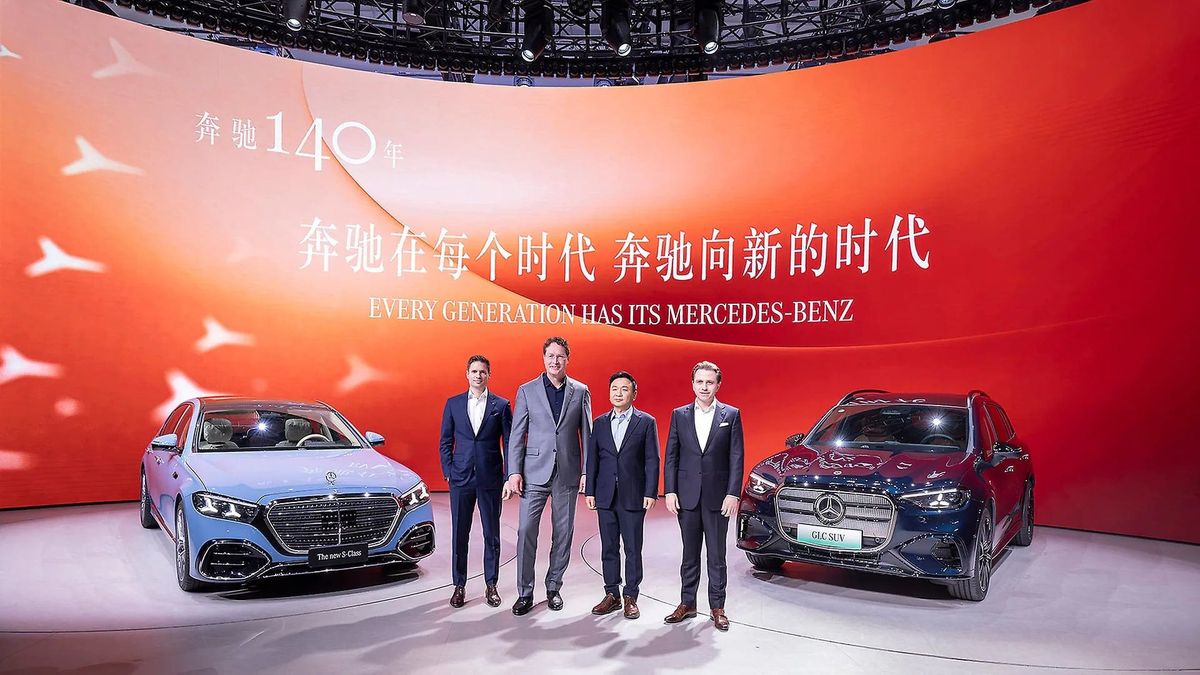
BMW’s and Mercedes’ next-generation EV models leverage updated platforms, incorporate localized technology from respected Chinese technology partners like Momenta, and are priced much more competitively than earlier models. They serve as initial tests of whether more competitive products will better position these brands in China. The Mercedes CLA L is currently on sale, and the electric GLC L is launching in stages; BMW opened iX3 L reservations on August 21.
Chinese shoppers found the Mercedes CLA L less compelling than the alternatives, with too little traditional Mercedes luxury and practicality to compensate. Third-party reports on the BMW iX3 L say it received a significant number of reservations based on pictures, specs, and pricing alone, suggesting it may have found a competitive product-and-price combination. Mercedes is testing whether the market agrees the GLC L, while still priced competitively relative to earlier models, is differentiated and worth a premium.
While BMW and Mercedes are demonstrating adaptation to the Chinese market, automodicted concludes that some former China volume may not be defensible at healthy economics:
…part of today's volume exists only at prices that destroy residual values and product substance.
R&R’s current Porsche read is that the brand has accepted a smaller China business on its own terms, reasoning that competing on the dynamics outlined above would compromise its brand. BMW and Mercedes operate much larger-volume premium businesses and have much stronger incentives to recover profitable volume.
If BMW and Mercedes can sustainably offer competitive products at prices customers will accept, and if buyers again give brand more weight in their purchasing decisions, the question is then whether they will remain permanently smaller in China's fiercely competitive market or will be able to rebuild volume profitably.