China Competitiveness
Can BMW rebuild profitable volume in China while remaining recognizably BMW?

Can BMW rebuild profitable volume in China while remaining recognizably BMW?
In the first half of 2026, BMW Group’s combined BMW and MINI deliveries roughly tracked a Chinese market that fell about 20%. BMW Group’s China deliveries declined from 2021 through 2025, roughly in line with Mercedes over the same period. This has left BMW with materially less volume as aggressive local price competition has reduced its margins. BMW’s China decline has overwhelmed gains in Europe and the U.S.
BMW’s core challenge in China has been that its products have been increasingly uncompetitive in recent years, as local EV offerings have reordered buyer priorities away from brand and toward product characteristics like range and charging, driver assistance, and interior technology. BMW’s guide pricing on these models has then been significantly discounted by dealers.
BMW’s incoming Neue Klasse products, led by the China-specific iX3 L, are built on a clean-sheet EV platform. The iX3 L has an extended wheelbase and technology the brand says has been extensively localized for China. BMW has priced the iX3 L competitively with local rivals and has shifted to nationwide pricing to ensure consistent, credible prices for customers and minimize dealer-to-dealer undercutting. Encouraging early third-party iX3 L reservation reports suggest that the brand’s next-generation Neue Klasse EVs may have found a viable product-price combination. There are also early signs that as the EV market matures, brand—a BMW strength—is moving up again as a buyer priority.
While encouraging, the third-party reservation figures haven’t been confirmed, and the reservations are low-commitment and were based entirely on pictures and specifications. Display and test-drive vehicles won’t be available until late October, initial deliveries don’t start until November, and some preliminary reservations will remain open until January 31, leaving a large window for cancellations. BMW’s transitioning retail system needs to convert these preliminary reservations into orders and those orders into deliveries.
More broadly, the China market hasn’t stood still while BMW has adjusted. The questions are whether the initial encouraging evidence proves out, whether the brand can then make the broader lineup resonate as new models like the i3 and iX5 roll out, and whether a restored product line is the basis of a permanently smaller China business or enables BMW to rebuild its volume profitably.
Still the world's largest auto market, China now increasingly sets the industry's cost, speed, and technology baseline—at home and in the markets its domestic brands are entering.
BMW’s product strategy is holding, but deteriorating economics have prompted management to pursue a faster, more responsive operating model
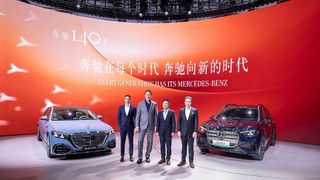
Recent analysis provides insight into the brands’ China challenge and questions whether their former volume can be restored
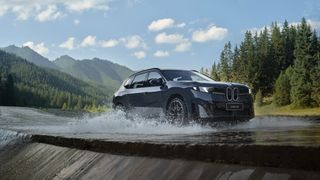
The product is resonating so far; now BMW’s retail channel needs to convert preliminary reservations into firm orders and deliveries

Both brands seek to regain pricing credibility and control; BMW is committing to lower, fixed figures, while Mercedes is preserving a premium and flexibility