Existing Volvos Will Be Updated with Google Gemini
Why the update is really about Volvo’s next generation
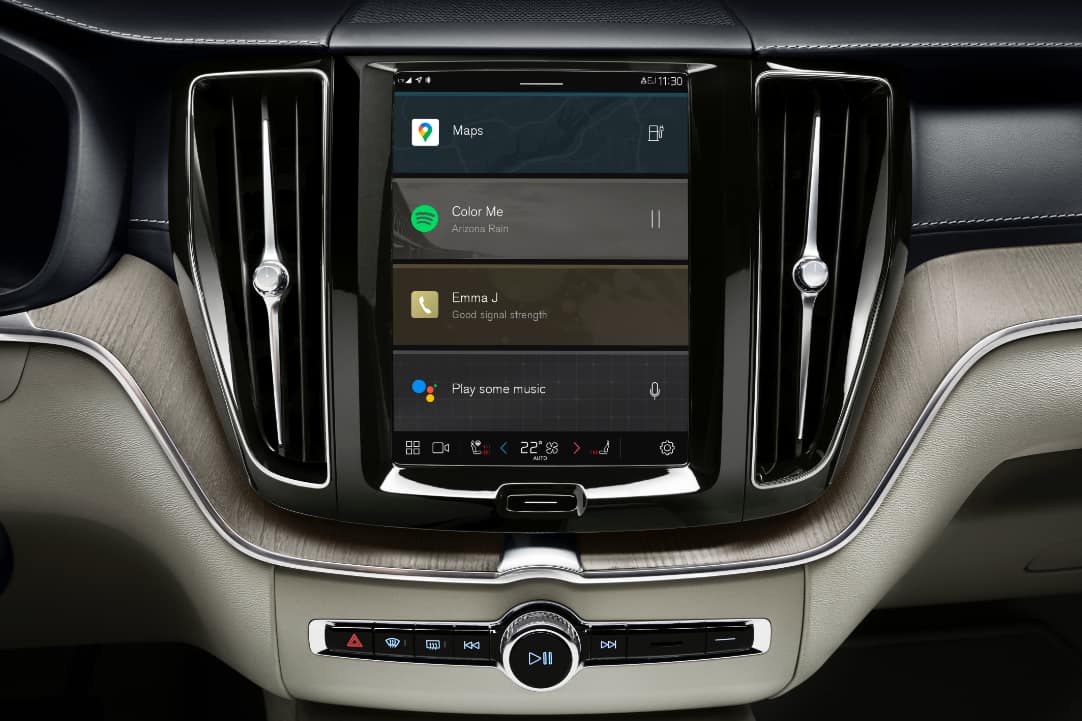
Later this year, roughly 2.5 million post-2020 Volvos will receive an over-the-air upgrade to the same core infotainment experience found in newer models like the EX30, EX90, and the newly revealed EX60—updating the UX and replacing the older Google Assistant with Gemini, Google’s modern AI assistant.
This is effectively an interim migration step as Volvo launches software-defined vehicles. Automakers are embracing an approach that echoes the software-first model Tesla pioneered: software will be treated as a primary, differentiating product surface, one that can change how the car works and feels long after delivery.
Volvo and others have laid the groundwork in their newest models, implementing centralized computing systems and software platforms that enable OTA updates and continuous cloud connectivity. This allows post-delivery changes to what a car does and how it does it. These changes extend beyond infotainment, impacting driver assistance, vehicle dynamics, hardware capabilities, and more.
The upgrade to existing Volvos will change the everyday infotainment experience. Customers will feel the difference—controls, layouts, and feature behavior for voice, navigation, media, and other things they’re used to may move or change (presumably for the better). But these cars are on older platforms, so this update won’t unlock new vehicle capabilities, alter performance, or change what the cars can do.
Replacing infotainment on pre-2020 models isn’t feasible—not because Volvo lacked ambition, but because the hardware, compute architectures, and in-car software platforms of the time weren’t designed for large-scale UX replacement. Android Automotive, used by Volvo and many others, didn’t arrive in production vehicles until 2019 and later.
Updating existing Volvos seems most about bolstering credibility with existing and potential customers as Volvo moves them toward new models. Volvo is using older models as proof that its next-generation vehicle promises are real.
It’s also an opportunity—intentional or not—to see how customers respond when a prominent element of their in-car experience significantly changes years into ownership. Legacy automakers have had years to learn from the ups and downs of Tesla’s aggressive approach to updates. We will see how they’ve applied those lessons.