Mercedes Holds onto Its Identity
The grille, the Hyperscreen, and the shifting sources of distinctiveness
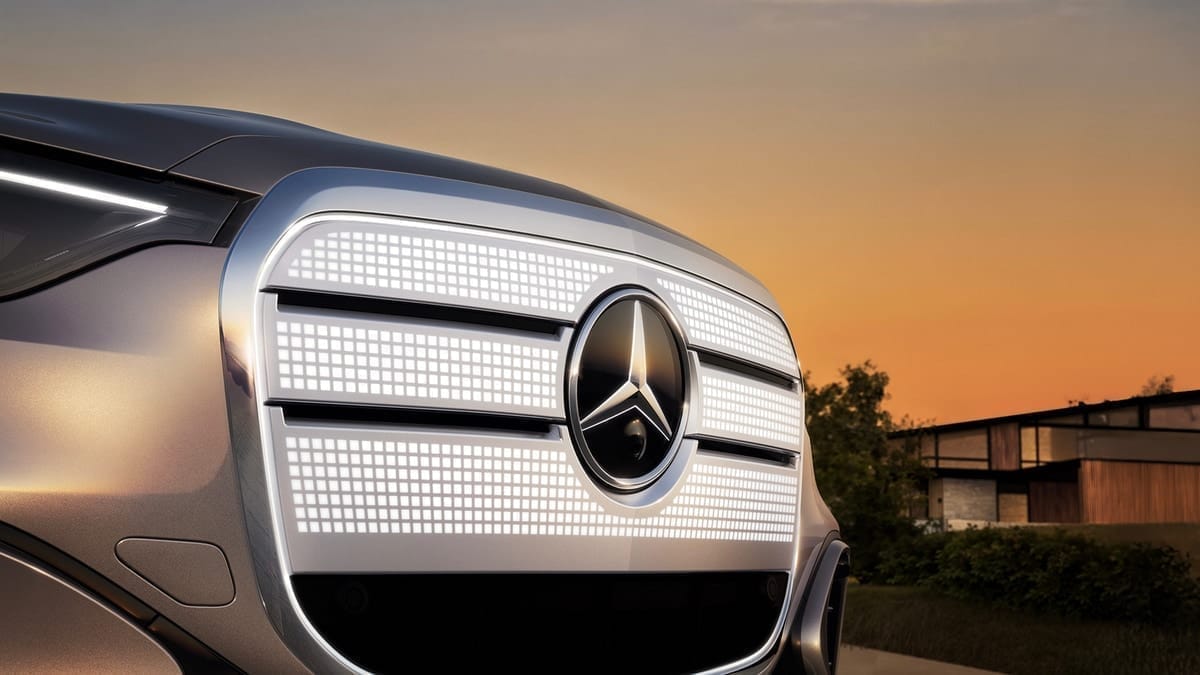
The first-drive reviews of the Mercedes-Benz Electric GLC are out, and the elements drawing the strongest reactions are recognizably Mercedes: the new grille and the interior. That suggests the company may be succeeding at a difficult task: making a software-defined EV feel like a Mercedes.
Car and Driver is enthusiastic on the GLC grille:
The GLC400's piehole harks back to 1959's Mercedes-Benz W111, right down to the fine detailing, which in this case is an available matrix of small LEDs that light up in a startup sequence. It sounds corny, but the grille looks fantastic.
The grille evoked a similar reaction in The Drive’s first-drive review:
The front grille has 942 illuminated points, and the egg-crate-like design harkens back to the W126 era in the best way possible. I love it.
Car and Driver is also unusually effusive about the GLC’s large screen:
The (quite obvious) elephant in the room is the available 39.1-inch Hyperscreen, which stretches across the cabin from one climate vent to the other. It's fantastic, no matter how much you want to hate it.
The “you want to hate it” line is aimed at auto enthusiasts skeptical of the way screens and other digital technologies have taken over many car interiors, often replacing traditional buttons and other typically tactile controls with solutions that don’t work as well. Car and Driver calling a screen “fantastic” is not an easily earned compliment.
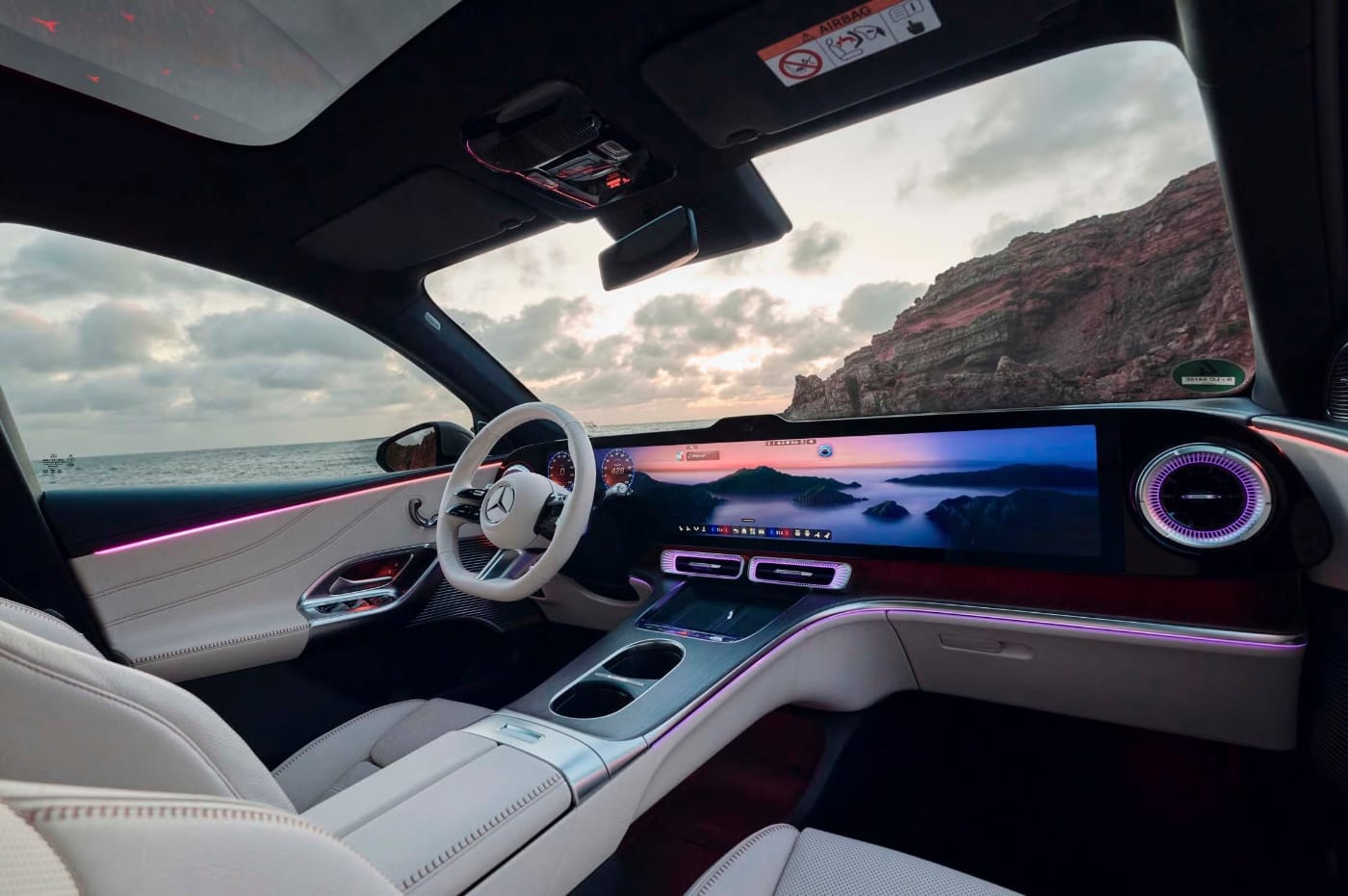
When early reviewers are this taken with both the grille and the Hyperscreen, it signals that Mercedes, a company whose focus on brand and prestige is high even by luxury automaker standards, is hitting the mark.
Beyond the GLC, it implies Mercedes may be adapting to a new set of differentiation realities. For luxury brands, style and desirability take on even more importance, even as the methods for delivering them are changing: electric propulsion is gradually flattening the powertrain playing field, while software and digital technology play an ever-larger role in shaping the experience.
Welcome home
Jason Cammisa talked about how EVs are likely to change the way cars are differentiated in his November 2022 ICONs review of the 2023 Genesis G90. Toward the end, he pivots to the GV60, which was new at the time and Genesis’s first EV:
“For the majority of automotive history, the primary differentiator has been the engine. … Once we go electric, there will really be no difference between a Kia and a Rolls-Royce, or a Genesis and a Bentley. So what becomes important is style.”
He goes on to describe what makes the GV60 unique, calling it “a high-style, truly desirable vehicle in the body style that people want the most,” with “some added X-factor thrown in, for the win.”
The Electric GLC may mark an important transition for Mercedes and, perhaps, for incumbent luxury automakers more broadly. Like the upcoming BMW iX3, it is a new clean-sheet EV in the compact luxury SUV segment and an early entry in a broader wave of new and updated models. In both cases, the vehicles also showcase new expressions of their brands’ design languages, shaped from the start by today’s assumptions: digital, software-defined, and electric.
Mercedes led with its brand face in its August 2025 electric GLC press release, putting most of the focus on the grille and the marque’s broader “Sensual Purity” design language. This quote from Gorden Wagener, Chief Design Officer, lays it out:
Our new iconic grille is not just a new front for the GLC, it redefines the face of our brand. It is the perfect fusion of lasting design codes reinterpreted for the future, making our cars instantly recognizable.
On an electric car, the grille no longer serves its traditional central cooling function. Mercedes is clear about its new grille’s role:
From a functional feature of the combustion-vehicle era, the new grille of the all‑electric GLC has evolved into an illuminated work of art, conveying prestige through reduction, clean lines and technology.
The key terms are “work of art” and “prestige”—indications that Mercedes wants the grille to communicate brand identity and status.
Mercedes followed that with a September press release focused on the details of the electric GLC’s interior:
With ambient lighting, eye-catching contours, exquisite decorative elements and the all-new seamless, breathtaking MBUX HYPERSCREEN, the all-new GLC redefines the art of interior elegance and digital convenience. It takes the unique Mercedes‑Benz “Welcome Home” feeling of comfort, safety and reassurance to the next level.
An important detail, beyond interior niceties like the galvanized vents, which “provide a cool, refined tech aesthetic”, is the “high-resolution atmospheric ambient styles” offering “a wide range of moods” that color the instrument cluster, controls, and ambient lighting “to create a personalized atmosphere in the vehicle where physical and digital worlds blend perfectly.”
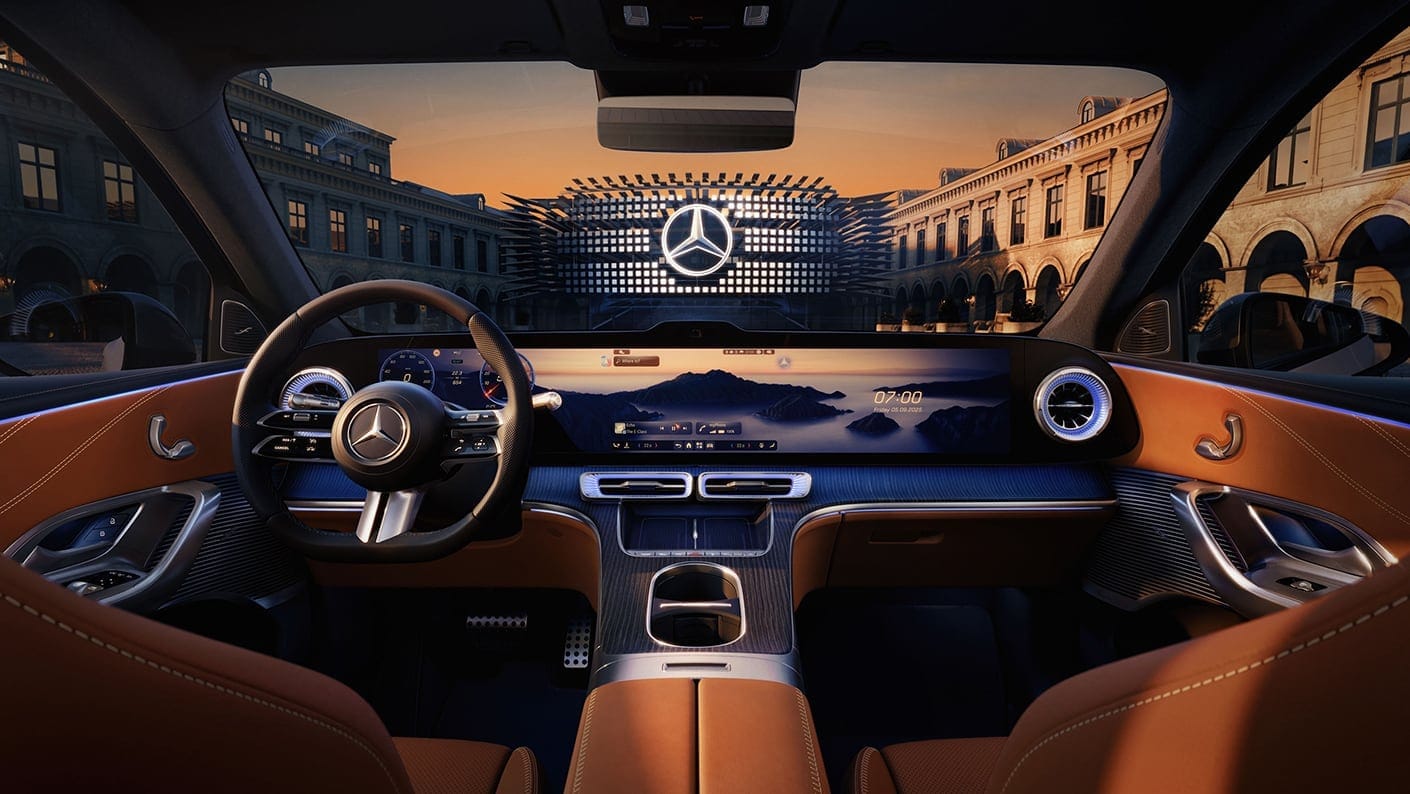
The blending of physical and digital worlds is the broader theme here. More of the vehicle experience is now shaped by computing, displays, speakers, microphones, sensors, and software, which means much of the differentiation comes from the feeling the brand creates through technology rather than from the vehicle’s mechanical signature.
Feeling like a Mercedes
Mercedes’ press release language offers a useful clue to the product’s design intent, but its real job is to tell a story Mercedes hopes will resonate with customers. More meaningful is that Car and Driver found the standout design elements “fantastic.”
The early indications from Car and Driver and others suggest Mercedes has been able to make its next-generation EV feel like a Mercedes-Benz, using a very different set of materials and methods than what made past models feel special. It also seems to be leaving the separate-feeling EQ era behind.
Assuming the first impression holds, the next questions are whether Mercedes can extend this appeal across the lineup and whether the distinct sense of occasion it has created remains unique to the brand—or whether, because it is built more on software and digital systems than on old mechanical differentiators, it stays distinct once others try to imitate it.